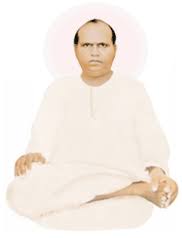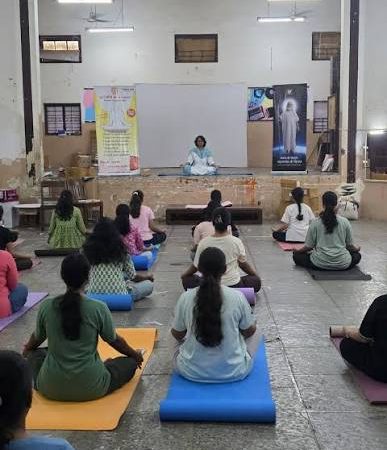

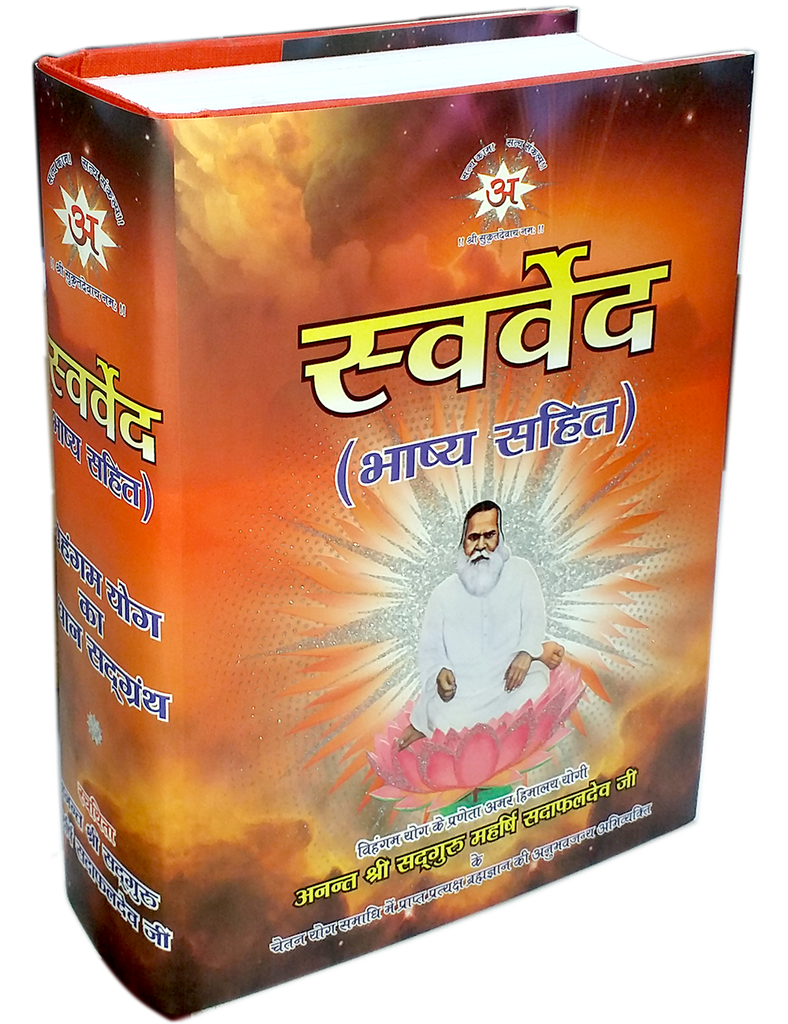
Swarved (स्वर्वेद) is the principal scripture of Vihangam Yoga, written by Sadguru Sadafal Deo Ji Maharaj based on his direct spiritual experiences in the state of Samadhi. Composed in simple Hindi couplets known as dohas, the Swarved explores the nature of consciousness, the Supreme Being, meditation, self-realisation, and the path to spiritual wisdom. Revered as a guide to Brahm Vidya, or the knowledge of the Supreme, it explains the importance of combining spiritual understanding with personal practice. Its teachings are also celebrated at Swarved Mahamandir in Varanasi, where thousands of verses are carved into the temple’s marble architecture. For spiritual seekers, the Swarved book offers a framework for understanding inner transformation and the philosophy of Vihangam Yoga.
Table of Contents
Quick Facts:
| Fact | Details |
|---|---|
| Scripture | Swarved (स्वर्वेद) |
| Author | Sadguru Sadafal Deo Ji Maharaj |
| Spiritual tradition | Vihangam Yoga |
| Place of composition | Himalayan caves, associated with Shoonya Shikhar Ashram |
| Language and style | Simple Hindi couplets (dohas) |
| Number of couplets | The Vihangam Yoga website describes 5,000 dohas; approximately 3,137 verses are reported as carved at Swarved Mahamandir |
| Commentary | Attributed to Sadhguru Dharmachandra Dev Ji Maharaj |
| Publication history | A 1938 edition (Wikipedia) is referenced in the bibliographic information; confirm the edition details against the original publication |
| Related spiritual narration | Swarved Kathamrit, presented by Sant Pravar Vigyan Dev Ji Maharaj |
What is Swarved?
Swarved holds a central position in the teachings of Vihangam Yoga. It is presented not simply as a religious text to be read or memorised, but as a record of spiritual knowledge arising from the author’s experience of higher consciousness.
According to the tradition, Sadguru Sadafal Deo Ji Maharaj attained profound states of yogic Samadhi and expressed his experiences through the verses of Swarved. The scripture discusses the relationship between the individual soul and the Supreme Being, the nature of consciousness, and the inner discipline required for spiritual progress.
The Swarved meaning is therefore closely connected with the pursuit of direct spiritual knowledge. Its verses encourage readers to look beyond external appearances, habitual desires, and purely intellectual explanations of life.
Unlike a text focused exclusively on rituals or philosophical debate, the Swarved connects spiritual principles with meditation and personal conduct. It explains why inner discipline, clarity of mind, detachment, and guidance from a qualified spiritual master are considered important within the Vihangam Yoga tradition.
For readers exploring the Swarved granth for the first time, the most useful approach is to understand its central ideas before studying individual dohas. The official Swarved page provides an introduction to the scripture and its spiritual background.
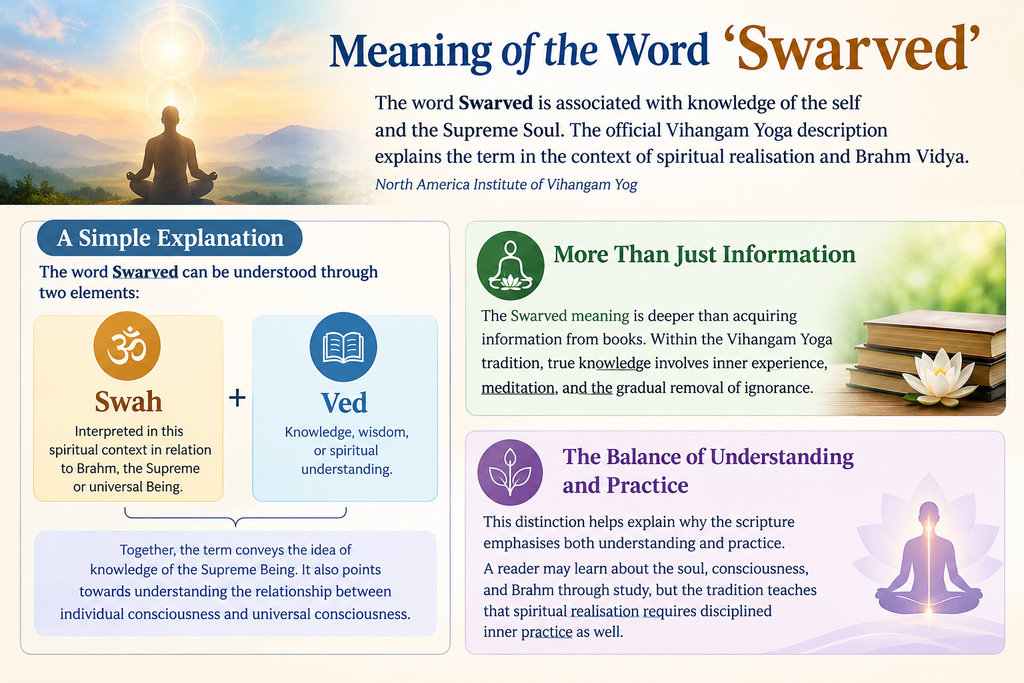
Meaning of the Word ‘Swarved’
The word Swarved is associated with knowledge of the self and the Supreme Soul. The official Vihangam Yoga description explains the term in the context of spiritual realisation and Brahm Vidya.
North America Institute of Vihangam Yog
A simple explanation of the word can be understood through two elements:
- Swah: Interpreted in this spiritual context in relation to Brahm, the Supreme or universal Being.
- Ved: Knowledge, wisdom, or spiritual understanding.
Together, the term conveys the idea of knowledge of the Supreme Being. It also points towards understanding the relationship between individual consciousness and universal consciousness.
The Swarved meaning is deeper than acquiring information from books. Within the Vihangam Yoga tradition, true knowledge involves inner experience, meditation, and the gradual removal of ignorance.
This distinction helps explain why the scripture emphasises both understanding and practice. A reader may learn about the soul, consciousness, and Brahm through study, but the tradition teaches that spiritual realisation requires disciplined inner practice as well.
Who Wrote Swarved and Where?
Swarved was written by Sadhguru Sadafal Deo Ji Maharaj, the founder of Vihangam Yoga. The tradition describes him as a Himalayan yogi whose prolonged meditation and spiritual discipline culminated in profound experiences of Samadhi.
According to the organisation’s official account, he composed the scripture in Himalayan caves, expressing his spiritual experiences in accessible Hindi couplets. The Shoonya Shikhar Ashram page identifies the Himalayan meditation cave associated with his practice and the creation of Swarved.
Shoonya Shikhar Ashram, located in Uttarakhand, is an important spiritual site connected with this history. It preserves the association between the Himalayan environment, contemplative discipline, and the origins of the scripture.
Rather than presenting Swarved as a compilation of ideas borrowed from other books, the Vihangam Yoga tradition regards it as an expression of direct yogic experience. Its teachings cover spiritual knowledge, consciousness, meditation, and the pursuit of God-realisation.
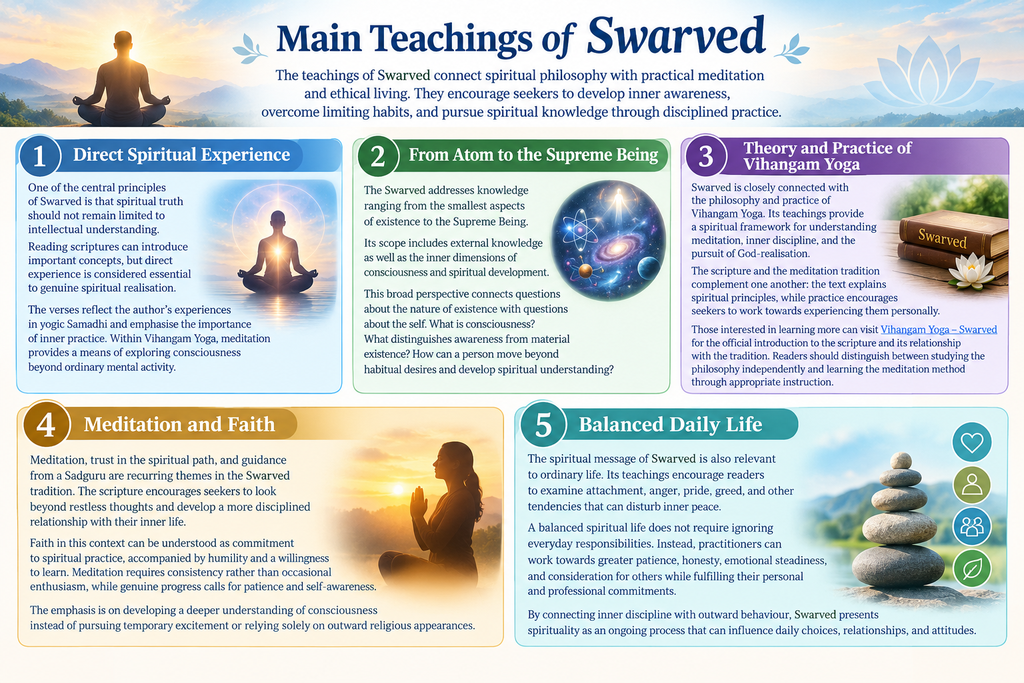
Main Teachings of Swarved
The teachings of Swarved connect spiritual philosophy with practical meditation and ethical living. They encourage seekers to develop inner awareness, overcome limiting habits, and pursue spiritual knowledge through disciplined practice.
1. Direct Spiritual Experience
One of the central principles of Swarved is that spiritual truth should not remain limited to intellectual understanding. Reading scriptures can introduce important concepts, but direct experience is considered essential to genuine spiritual realisation.
The verses reflect the author’s experiences in yogic Samadhi and emphasise the importance of inner practice. Within Vihangam Yoga, meditation provides a means of exploring consciousness beyond ordinary mental activity.2. From Atom to the Supreme Being
The Swarved addresses knowledge ranging from the smallest aspects of existence to the Supreme Being. Its scope includes external knowledge as well as the inner dimensions of consciousness and spiritual development.
This broad perspective connects questions about the nature of existence with questions about the self. What is consciousness? What distinguishes awareness from material existence? How can a person move beyond habitual desires and develop spiritual understanding?
3. Theory and Practice of Vihangam Yoga
Swarved is closely connected with the philosophy and practice of Vihangam Yoga. Its teachings provide a spiritual framework for understanding meditation, inner discipline, and the pursuit of God-realisation.
The scripture and the meditation tradition complement one another: the text explains spiritual principles, while practice encourages seekers to work towards experiencing them personally.
Those interested in learning more can visit Vihangam Yoga – Swarved for the official introduction to the scripture and its relationship with the tradition. Readers should distinguish between studying the philosophy independently and learning the meditation method through appropriate instruction.
4. Meditation and Faith
Meditation, trust in the spiritual path, and guidance from a Sadguru are recurring themes in the Swarved tradition. The scripture encourages seekers to look beyond restless thoughts and develop a more disciplined relationship with their inner life.
Faith in this context can be understood as commitment to spiritual practice, accompanied by humility and a willingness to learn. Meditation requires consistency rather than occasional enthusiasm, while genuine progress calls for patience and self-awareness.
The emphasis is on developing a deeper understanding of consciousness instead of pursuing temporary excitement or relying solely on outward religious appearances.
5. Balanced Daily Life
The spiritual message of Swarved is also relevant to ordinary life. Its teachings encourage readers to examine attachment, anger, pride, greed, and other tendencies that can disturb inner peace.
A balanced spiritual life does not require ignoring everyday responsibilities. Instead, practitioners can work towards greater patience, honesty, emotional steadiness, and consideration for others while fulfilling their personal and professional commitments.
By connecting inner discipline with outward behaviour, Swarved presents spirituality as an ongoing process that can influence daily choices, relationships, and attitudes.
Swarved Verses in Swarved Mahamandir

The connection between Swarved and Swarved Mahamandir is one of the most visible expressions of the scripture’s importance. Located in Umraha near Varanasi, Uttar Pradesh, the Mahamandir is a major spiritual centre dedicated to the teachings of Swarved and the promotion of meditation.
The temple’s architecture incorporates spiritual verses into its design. The Mahamandir is associated with thousands of carved verses, creating a setting where visitors can encounter the scripture’s teachings through both its physical environment and its spiritual message. Institutional material also describes the use of white Makrana marble in the site’s presentation.
Swarved Granth: 3,137 Verses Carved in Marble
The figure of approximately 3,137 verses carved in Swarved Mahamandir is frequently associated with the monument. It is important to distinguish this figure from the total number of couplets attributed to the scripture: the official Vihangam Yoga Swarved page describes the text as containing 5,000 dohas.
The carved verses give the Swarved granth a physical presence within the temple, linking its spiritual message with the visitor’s experience of the building. For devotees, the Mahamandir represents a place to reflect on the scripture’s teachings, explore meditation, and learn about the Vihangam Yoga tradition.
Swarved Commentary & Kathamrit
The language of a spiritual scripture can be concise, symbolic, and difficult for first-time readers to interpret. Commentary and explanatory discourses can help readers understand the terminology, context, and practical significance.
The traditional commentary on Swarved is attributed to Sadguru Dharmachandra Dev Ji, who helped explain the deeper meaning of its verses. His work is important because it connects the scripture’s concise couplets with the broader teachings of Brahm Vidya and Vihangam Yoga.
Readers exploring the Swarved book may find a commentary particularly useful when a verse appears abstract or when its spiritual meaning is not immediately clear. The commentary offers a way to study the teachings in greater depth instead of relying on a literal translation alone.
Swarved Kathamrit is a musical narration and explanation of the scripture presented by Sant Pravar Vigyan Dev Ji Maharaj. It presents the spiritual message of Swarved through spoken explanations, rhythmic recitation, and music.
This format can make the teachings more approachable for people who prefer listening to reading. It also allows listeners to reflect on the meaning of individual dohas and how their ideas relate to spiritual practice and daily life.
Where to Read or Buy Swarved
Readers interested in studying Swarved can begin with the official resources published by Vihangam Yoga. Choosing an authorised edition is helpful for accessing the original Hindi verses and, where available, their accompanying commentary.
Here are three practical options:
- Order the printed book: The official Swarved ordering page provides an order form for obtaining a copy. The official books page also lists editions, including the original Hindi text and editions with commentary. Confirm current prices, shipping availability, and the edition you need before ordering.
- Contact an ashram: The Shoonya Shikhar Ashram website provides contact details for enquiries. You can ask whether copies are available locally or whether another authorised centre can assist.
- Explore online resources: Visit the official Swarved page for introductory material and related spiritual teachings. You can also explore the official Vihangam Yoga website for audio and video resources.
5 Popular Swarved Dohe with Meaning
The following Swarved dohas are reproduced from published material on the official North America Institute of Vihangam Yoga website. Their English explanations are simplified summaries intended to help new readers understand the ideas.
| Swarved doha | Simple English meaning |
|---|---|
| 1. 1.10.2 — Asha vasana prema jaga, raga dvesha sanga lina | Karai Himalaya vasa so, labha kavan mati hina || | Merely living in the Himalayas does not bring spiritual benefit if the mind remains attached to desires, likes, and dislikes. Inner transformation matters more than changing one’s surroundings. |
| 2. 1.10.4 — Sadguru bhakta ananya hai, prema viraha anuraga | Tehi nara sukha shanti milai, jaki purana bhaga || | Devotion characterised by sincere love and longing for the Sadguru is associated with inner peace and spiritual fulfilment. |
| 3. 3.9.22 — Dhanmad balmad jaatimad, vidyamad sab tyag | Tab manav jeevan banei, sant charan anurag || | Let go of pride arising from wealth, power, social identity, and knowledge. Humility and devotion help cultivate genuine human values. |
| 4. 3.9.31 — Abhimani abhimaan mei, guru se chahat maan | Chaurasi bhatkat phirai, janm keet kur shwaan || | The verse warns against arrogance and seeking praise from the Guru. It emphasises humility rather than ego in spiritual life. |
| 5. 3.9.33 — Asha manasa nahi mare, mari mari dhare sharira | Manmatha mana ki vasana, mara jive koi dhira || | Worldly cravings can persist beyond the end of a single life. Overcoming desire requires patience, discipline, and inner transformation. |
Conclusion:
Swarved is more than a spiritual book: within the Vihangam Yoga tradition, it is a guide to understanding consciousness, practising meditation, and pursuing knowledge of the Supreme Being. Its Hindi dohas explore timeless themes such as humility, self-discipline, devotion, and freedom from worldly attachment.
FAQs:
Q. What is Swarved?
A. Swarved is the principal scripture of Vihangam Yoga. It contains spiritual teachings attributed to the direct experiences of Sadguru Sadafal Deo Ji Maharaj in yogic Samadhi and discusses consciousness, meditation, and knowledge of the Supreme Being.
Q. Who wrote Swarved?
A. Swarved was written by Sadguru Sadafal Deo Ji Maharaj, the founder of Vihangam Yoga. The tradition associates its composition with his spiritual practice in the Himalayan caves.
Q. What is the meaning of Swarved?
A. Swarved refers to spiritual knowledge of the self and the Supreme Soul. It is closely associated with Brahm Vidya, the pursuit of knowledge and realisation of the Supreme Being.
Q. How many verses are in Swarved?
A. The official Vihangam Yoga page describes Swarved as containing 5,000 Hindi dohas, while approximately 3,137 verses are reported as carved in Swarved Mahamandir. These figures refer to different contexts and should not be confused.
Q. In which language is Swarved written?
A. The scripture is written in Hindi, using concise couplets known as dohas. Romanised versions and explanatory translations can help readers who are unfamiliar with Hindi.
Q. Where was Swarved written?
A. According to the Vihangam Yoga tradition, Sadguru Sadafal Deo Ji Maharaj composed Swarved in Himalayan caves. Shoonya Shikhar Ashram in Uttarakhand is associated with his meditation practice and the scripture’s origins.
Q. Where can I buy Swarved?
A. You can consult the official Swarved ordering page or the Vihangam Yoga books catalogue. Confirm current availability, edition, price, and delivery options directly with the organisation.
Q. What is Swarved Kathamrit?
A. Swarved Kathamrit is a musical narration and explanation of Swarved presented by Sant Pravar Vigyan Dev Ji Maharaj. It combines spoken interpretation, recitation, and music to make the scripture’s spiritual teachings more accessible.