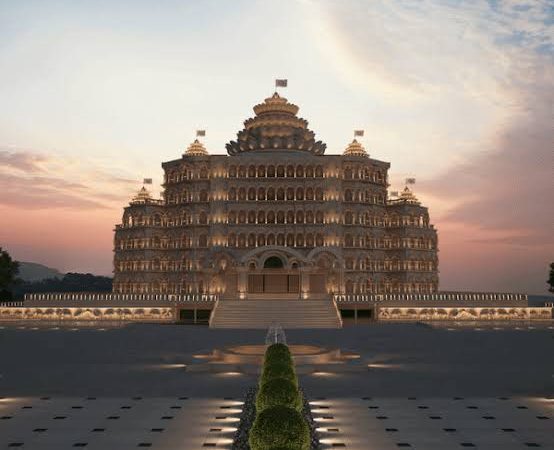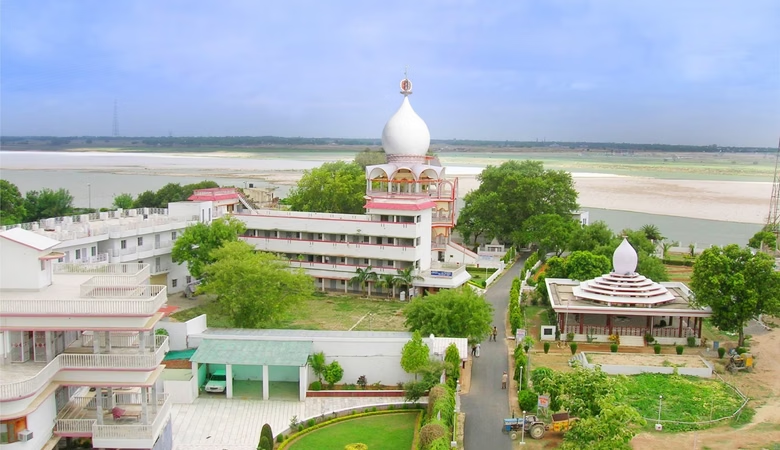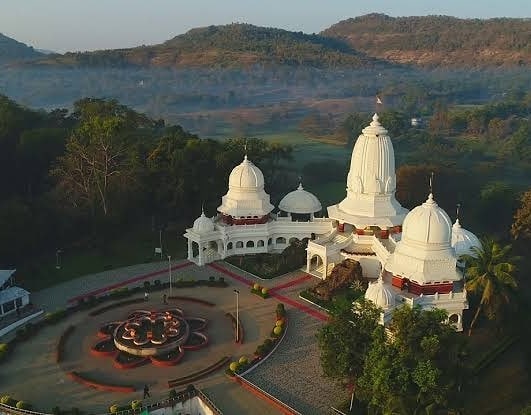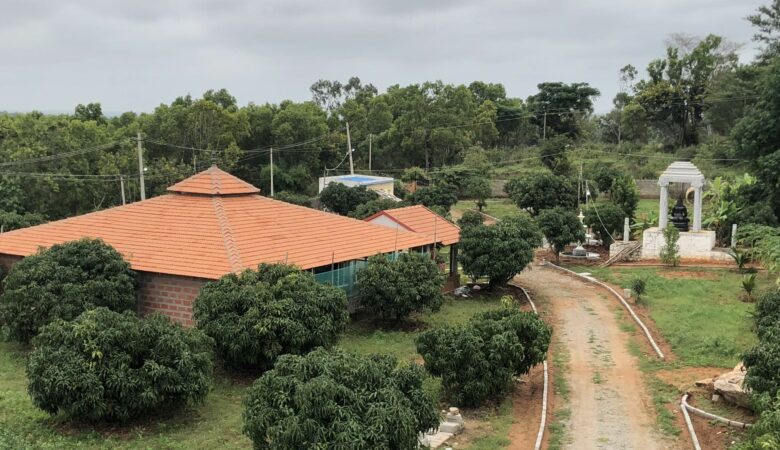

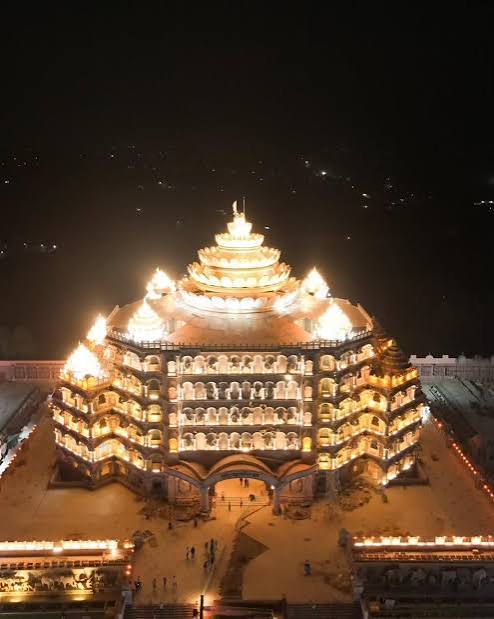
Swarved Mahamandir in Varanasi is a magnificent meditation temple located in Umraha, Uttar Pradesh. Inaugurated by Prime Minister Narendra Modi on 18 December 2023, this seven-storey spiritual complex is dedicated to Swarved, a sacred spiritual text authored by Sadguru Sadafal Deo Ji Maharaj. Often described as Swarved Mahamandir, the world’s largest meditation centre, it combines spiritual philosophy, intricate Indian architecture and opportunities for meditation.
Table of Contents
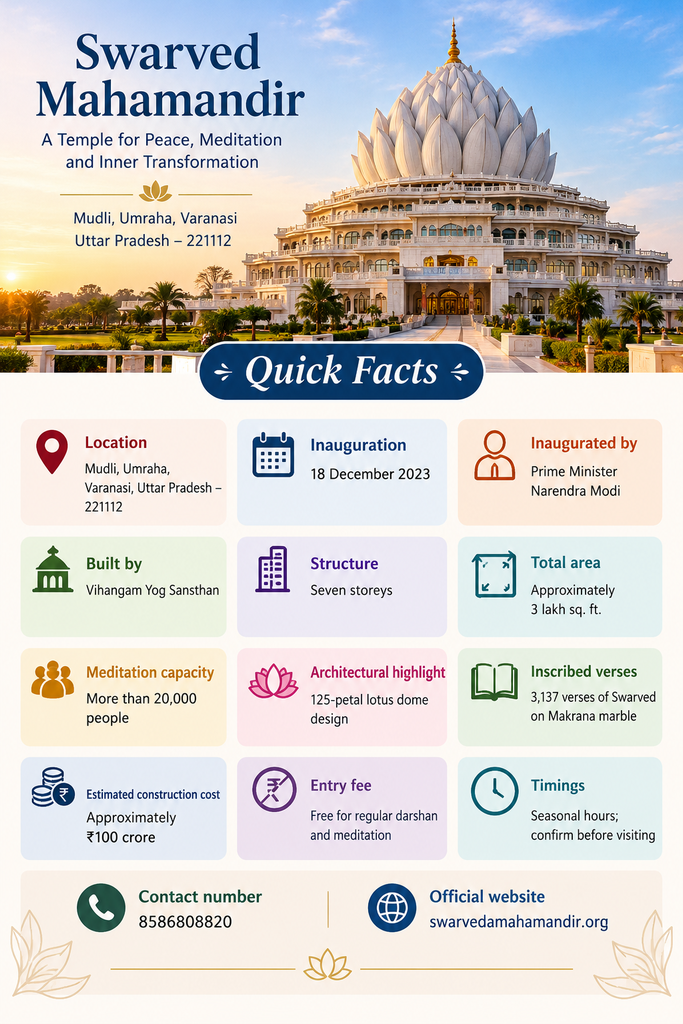
Swarved Mahamandir: Quick Facts
| Detail | Information |
|---|---|
| Location | Mudli, Umraha, Varanasi, Uttar Pradesh – 221112 |
| Inauguration | 18 December 2023 |
| Inaugurated by | Prime Minister Narendra Modi |
| Built by | Vihangam Yog Sansthan |
| Structure | Seven storeys |
| Total area | Approximately 3 lakh sq. ft. |
| Meditation capacity | More than 20,000 people |
| Architectural highlight | 125-petal lotus dome design |
| Inscribed verses | 3,137 verses of Swarved on Makrana marble |
| Estimated construction cost | Approximately ₹100 crore |
| Entry fee | Free for regular darshan and meditation |
| Timings | Seasonal hours; confirm before visiting |
| Contact number | 8586808820 |
| Official website | swarvedamahamandir.org |
What Is Swarved Mahamandir?
Swarved Mahamandir, also known as Swarved Mahamandir Dham, is a large spiritual and meditation complex in Umraha, on the outskirts of Varanasi. Unlike conventional temples primarily associated with the worship of a particular deity, this mandir is dedicated to the spiritual teachings of Swarved, a text composed by Sadguru Sadafal Deo Ji Maharaj, the founder of Vihangam Yoga.
The word Swarved is associated with spiritual knowledge, inner awareness, and the journey towards self-realisation. The text explores the nature of consciousness and the importance of inner transformation. Its teachings form the philosophical foundation of the meditation practices associated with Vihangam Yoga.
The Swarved Mandir is designed as a place where people can explore these teachings in a peaceful environment. Its expansive meditation halls allow thousands of practitioners to gather for spiritual activities, while verses from the text engraved on the marble walls make the scripture an integral part of the architecture.
The centre also supports educational, cultural and social-welfare initiatives. Its broader mission is to encourage peace, harmony, ethical living and spiritual development.
Visitors from different backgrounds can explore the complex and learn about its philosophy. You do not need to be a regular practitioner of Vihangam Yoga to appreciate the architecture or visit the premises. However, specific meditation techniques and formal programmes may require guidance or initiation.
History of Swarved Mahamandir
The history of Swarved Mahamandir is closely connected with Sadguru Sadafal Deo Ji Maharaj and the development of Vihangam Yoga.
Vihangam Yoga was founded in 1924 by Sadguru Sadafal Deo Ji Maharaj as a spiritual path focused on meditation, self-discipline, and inner development. Its teachings emphasise the importance of looking beyond external rituals to understand the inner dimensions of human consciousness.
The idea behind Swarved Mahamandir was to create a major centre where the teachings of Swarved could be presented through architecture, meditation and spiritual education. Rather than serving only as a conventional place of worship, the complex was envisioned as a meeting place for meditation practitioners and spiritual seekers.
Construction of the monumental structure culminated in the celebrations marking the centenary of Vihangam Yoga in December 2023. The seven-storey building, its lotus-inspired design and its extensive marble inscriptions were conceived to reflect the spiritual significance of the text.
Prime Minister Narendra Modi inaugurated Swarved Mahamandir on 18 December 2023, during his visit to Varanasi. The event brought national attention to the complex and its ambitious vision of combining India’s spiritual heritage with modern architectural design.
Today, Swarved Mahamandir stands as an important destination for visitors interested in meditation, Vihangam Yoga, Indian architecture, and the spiritual traditions of Varanasi.
The complex was built by Vihangam Yog Sansthan to promote the teachings of Swarved and the spiritual practices associated with Vihangam Yoga. The monumental structure was inaugurated by PM Modi on 18 December 2023, during celebrations marking the centenary of Vihangam Yoga.
For additional historical information, visitors can consult Swarved Mahamandir (Wikipedia) alongside the organisation’s official resources.
Architecture & What’s Inside Swarved Mahamandir
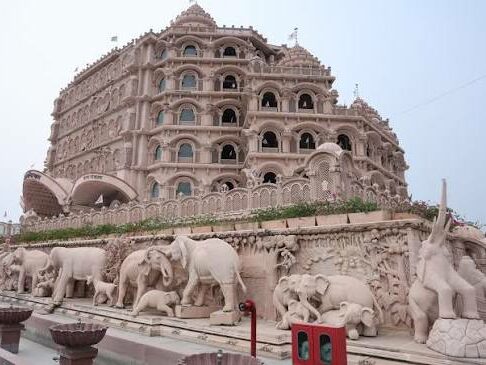
Swarved Mahamandir is notable for its enormous scale and its combination of traditional Indian design elements with modern construction. The seven-storey structure features pink sandstone detailing, white marble surfaces, intricately carved architectural elements and a distinctive lotus-inspired design.
Its most recognisable features include the lotus dome, the marble walls engraved with verses from Swarved, expansive meditation spaces and a presentation about the life of the organisation’s founder.
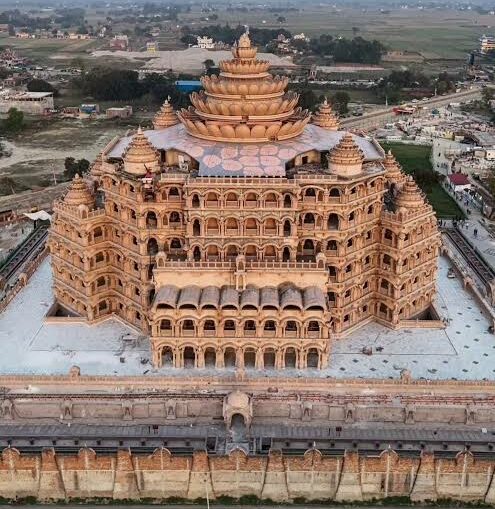
125-Petal Lotus Dome
The lotus is a powerful symbol in Indian spiritual traditions, often associated with purity, knowledge and the unfolding of consciousness. Swarved Mahamandir incorporates this symbolism through its striking 125-petal lotus dome design.
The lotus-inspired architectural details give the complex a distinctive appearance and connect its visual identity with its spiritual purpose. The repeated petal forms create a sense of symmetry and grandeur, while the broader architectural design combines traditional motifs with the scale of a contemporary institutional building.
For visitors, the dome is one of the principal architectural highlights of the Swarved Mahamandir Dham. It is also a reminder of the complex’s central idea: spiritual growth through meditation, knowledge, and inner awareness.
3,137 Swarved Verses on Makrana Marble
One of the most distinctive features of Swarved Mahamandir is the inscription of 3,137 verses from Swarved on Makrana marble walls.
Makrana marble is widely recognised for its use in prominent Indian architectural projects. At Swarved Mahamandir, the marble provides a light-coloured surface on which the spiritual verses can be displayed as part of the building itself.
These inscriptions connect the physical space with the teachings of Sadguru Sadafal Deo Ji Maharaj. Instead of treating the scripture as a separate book alone, the architecture brings its verses into the visitor’s surroundings.
The inscriptions also contribute to the visual richness of the interiors. Visitors can observe the craftsmanship and the relationship between written spiritual teachings and the temple’s design. The combination of marble, carved details, and large meditation areas makes the complex an interesting destination for those who appreciate Indian religious architecture.
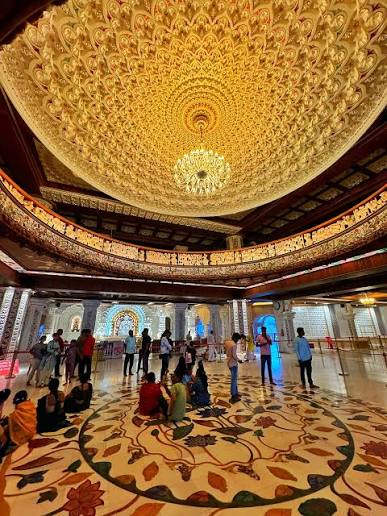
Meditation Hall for 20,000 People
The scale of the meditation facilities is one of the main reasons Swarved Mahamandir is described as the world’s largest meditation centre. The seven-storey complex covers approximately 3 lakh square feet and is designed to accommodate more than 20,000 people meditating together.
The large halls provide space for collective spiritual gatherings, guided activities and meditation-related programmes. Depending on the schedule, visitors may encounter organised sessions, chanting, readings from Swarved or other activities associated with Vihangam Yoga.
Not every visitor should assume that an unrestricted meditation session is available at all times. Programmes can depend on the day’s schedule, the availability of instructors and special events.
Even when no large gathering is taking place, the meditation-focused design is central to the experience. The scale of the hall illustrates the project’s ambition to bring thousands of people together in a shared environment dedicated to inner peace and spiritual learning.
Life of Sadguru Presentation
Swarved Mahamandir includes a mechanical presentation about the life of Sadguru Sadafal Deo Ji Maharaj. The presentation introduces visitors to the founder’s life, spiritual journey, and contribution to Vihangam Yoga.
Through a specially arranged display, visitors can learn more about the person whose teachings inspired the complex and the spiritual text for which it is named.
The presentation adds a historical and educational dimension to the visit. It helps explain the relationship between Swarved, Vihangam Yoga and the construction of the mandir, making it particularly useful for first-time visitors who are unfamiliar with the organisation’s background.
Availability and operating schedules may vary, so visitors interested in seeing the presentation should enquire at the complex on arrival.
Swarved Mahamandir Timings & Entry Fee
Checking the latest Swarved Mahamandir timings is important before planning your visit. The official website lists daily opening hours that change according to the season. It also states that the trust does not charge for regular darshan, aarti, or meditation.
However, different online listings may show different closing times. Confirm the current schedule, especially if you are travelling from another part of Varanasi or planning to attend a particular programme.
| Visitor information | Details |
|---|---|
| Opening days | Daily, according to the official website |
| Summer hours | 8:00 AM–9:00 PM |
| Winter hours | 8:00 AM–8:00 PM |
| Morning programme | The website lists 4:00 AM–6:00 AM for morning activities |
| Evening programme | The website lists 6:00 PM–8:00 PM |
| Swarved Mahamandir entry fee | Free for regular darshan and meditation |
| Parking | Confirm availability and any event-day arrangements with the trust |
| Photography | Ask staff about current restrictions before taking photographs or videos |
Important: These are the hours published on the official website, not a guarantee that every area or programme will be available throughout the day. For confirmation, visit the official Swarved Mahamandir website or call 8586808820 before travelling.
How to Reach Swarved Mahamandir
Swarved Mahamandir is situated in Mudli, Umraha, in the Varanasi district of Uttar Pradesh. It lies along the Varanasi–Ghazipur highway corridor and can be reached by taxi, private car or other local transport.
The most convenient option depends on whether you are arriving by train, flying into Varanasi or already exploring the city’s tourist attractions.
From Varanasi Junction (Cantt)
Varanasi Junction, also known as Varanasi Cantt railway station, is a major arrival point for visitors travelling by train. From the station, you can hire a private taxi or book a cab to Swarved Mahamandir in Umraha.
The journey takes you away from the busy central areas towards the outskirts of the city. Travel time depends on traffic, the chosen route and road conditions. Allow additional time during festivals, rush hours and large spiritual gatherings.
Auto-rickshaws may also be available, but a pre-booked cab is often more comfortable for families or groups. Ask the driver to confirm the fare before departure if you are not using a metered or app-based service.
For the most accurate distance and estimated journey time, check a live navigation app using your exact starting point at Varanasi Junction.
From Varanasi Airport (Lal Bahadur Shastri International Airport)
Travellers arriving by air can reach Swarved Mahamandir by hiring a prepaid airport taxi or booking a cab. The airport is at Babatpur, northwest of central Varanasi, while the mandir is in Umraha.
The route and journey time depend on the road selected and current traffic. A direct cab is generally the most convenient option, particularly if you have luggage or are travelling with children or older family members.
Before starting, enter Swarved Mahamandir Dham, Umraha, Varanasi as your destination in a navigation app. Confirm the fare with the driver or use a booking service that displays the estimated cost in advance.
From Sarnath
Sarnath is a popular Buddhist pilgrimage destination near Varanasi and can be combined with a visit to Swarved Mahamandir in a single day.
The official Swarved Mahamandir website places Sarnath railway station approximately 14 km away. A taxi or private car is a practical way to travel between the two locations, although the journey time depends on traffic and the precise starting point.
You can visit the archaeological sites and Buddhist monuments at Sarnath first, then travel to Umraha for the temple’s architecture and spiritual atmosphere. Check the opening hours of both destinations before finalising your itinerary.
By Road or Own Vehicle
If you are travelling by car, follow the road towards Umraha along the Varanasi–Ghazipur highway corridor. Use a navigation app for the latest directions, as traffic conditions and local road restrictions can affect the best approach.
Driving can be convenient for families and visitors planning to explore other places outside central Varanasi. Before leaving, check whether parking is available at the complex and whether special events are expected to attract large crowds.
Do not assume that parking arrangements are unchanged on major festival days or during large Vihangam Yoga gatherings. Confirm with the trust if you are visiting with a larger vehicle or a group.
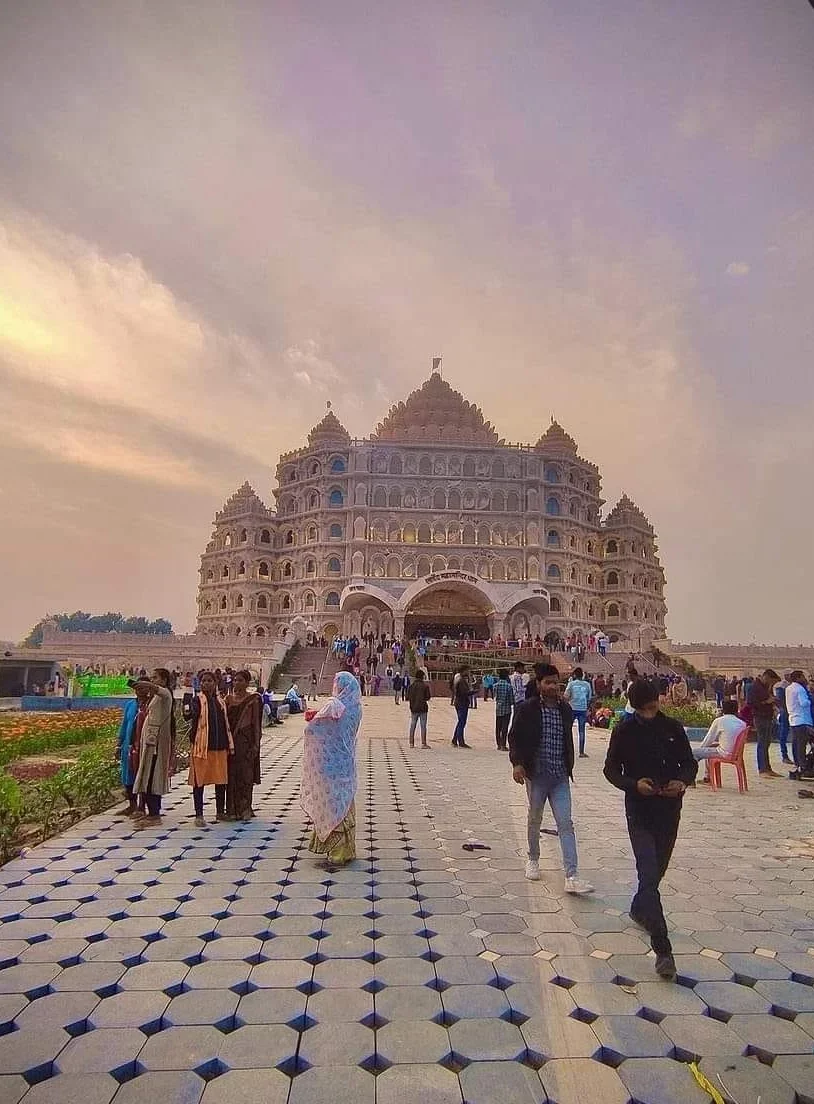
Rules & Dress Code at Swarved Mahamandir
Swarved Mahamandir is a spiritual environment, so visitors should behave respectfully and follow instructions from the staff. The rules may differ during major events or organised meditation programmes.
Keep these practical guidelines in mind:
- Wear modest clothing: Choose comfortable attire that covers your shoulders and knees, particularly if you plan to participate in spiritual activities.
- Maintain silence: Avoid loud conversations inside meditation areas and respect people who are meditating.
- Remove footwear when instructed: Follow the signs and staff directions regarding shoes before entering designated areas.
- Ask before taking photographs: Photography and video recording may be restricted in certain areas. Confirm the current policy before taking pictures.
- Avoid reels and disruptive videos: Do not film other visitors or interrupt meditation sessions for social media content.
- Follow staff instructions: Respect access restrictions, crowd-management arrangements and directions during organised events.
- Keep the premises clean: Use designated bins and avoid littering in the building or gardens.
- Respect scheduled programmes: Do not enter restricted areas or walk through an active session without permission.
Meditation & Vihangam Yoga Programs
Swarved Mahamandir is more than an architectural attraction. It is a major centre associated with Vihangam Yoga, a meditation tradition founded by Sadguru Sadafal Deo Ji Maharaj in 1924.
Visitors may encounter group meditation, spiritual discourses, readings from Swarved, prayer programmes and other activities depending on the schedule. Some activities are associated with special gatherings or organised courses, so the availability of a particular programme should be confirmed before visiting.
An important distinction is that visiting the mandir and learning a formal meditation technique are not necessarily the same thing. According to the Vihangam Yoga tradition, the specific meditation practice is taught through a process of initiation, commonly called diksha, under appropriate guidance. Visitors should not assume that every technique can be learned simply by entering the building.
If you are interested in practising Vihangam Yoga, ask the organisers about introductory sessions, initiation arrangements and programmes suitable for beginners. The trust’s educational and social initiatives also reflect its wider aim of encouraging ethical living, inner development and community welfare.
Swarved Mahamandir is an important centre associated with Vihangam Yoga, a meditation tradition founded by Sadguru Sadafal Deo Ji Maharaj in 1924. If you want to learn more about its philosophy and practices, read our guide What is Vihangam Yoga.
The meditation practices associated with the tradition focus on inner awareness and spiritual development. Those interested in concentrative meditation can enquire about suitable introductory sessions and formal instruction at the centre.
Best Time to Visit & Time Needed
The best time to visit Swarved Mahamandir is generally between October and March, when Varanasi’s weather is usually more comfortable for sightseeing. During these months, you can explore the complex without the intense daytime heat that often affects Uttar Pradesh in summer.
An early-morning visit is worth considering if you prefer a quieter atmosphere. However, confirm the current opening time before leaving, as regular visiting hours and scheduled spiritual programmes may differ.
Plan approximately 2–3 hours for a leisurely visit. This should give you time to appreciate the architecture, observe the marble inscriptions, explore accessible areas and learn about the spiritual background of the complex. If you are attending a meditation session, visiting with a group or travelling on a major event day, allow extra time.
Summer visits can also be enjoyable with proper planning, but carry drinking water, wear comfortable clothing and avoid unnecessary exposure to the midday heat. During large religious gatherings, expect possible queues, heavier traffic and changes to access arrangements.
Places to Visit Near Swarved Mahamandir
Varanasi has a rich combination of spiritual landmarks, riverfronts, educational institutions and historic sites. If you have extra time, consider adding these places to your itinerary.
- Sarnath: A major Buddhist pilgrimage site where Gautama Buddha is traditionally believed to have delivered his first sermon. Explore the Dhamek Stupa, archaeological remains, and local museums.
- Kashi Vishwanath Temple: One of India’s best-known Shiva temples, located in the heart of Varanasi. Allow extra time for security checks and queues.
- Dashashwamedh Ghat: A prominent Ganga ghat known for its evening Ganga Aarti and its lively riverfront atmosphere.
- Assi Ghat: A popular riverside destination for morning walks, boat rides, and experiencing the cultural life of Varanasi.
- Banaras Hindu University (BHU): A major educational institution with an expansive campus and important cultural landmarks.
- Bharat Kala Bhavan: Located within BHU, this museum houses collections of art, sculpture, textiles and historical objects.
- Ramnagar Fort: A historic fort on the eastern bank of the Ganga, known for its royal heritage and museum collections.
You can combine Swarved Mahamandir with Sarnath for a relatively straightforward outing outside the main city centre. Kashi Vishwanath Temple and the ghats are better planned around your available time, traffic, and any queue or security requirements.
For additional travel information, consult the Kashi official tourism listing and verify current directions and visiting arrangements before planning your itinerary.
Tips for First-Time Visitors
A little preparation can make your visit to Swarved Mahamandir more comfortable and enjoyable.
- Arrive early: An early start can help you avoid the hottest part of the day and may make it easier to explore before peak visitor periods.
- Confirm timings: Check the official website or call the trust before travelling, particularly around festivals and special events.
- Carry drinking water: This is especially useful during summer or if you plan to visit other attractions on the same day.
- Wear comfortable footwear: You may need to remove your shoes in designated areas. Socks can help protect your feet from hot surfaces in summer, provided they comply with local rules.
- Dress appropriately: Modest, comfortable clothing is a practical choice for a meditation-oriented spiritual complex.
- Allow enough time: Set aside 2–3 hours for the complex, with extra time for guided activities or crowded days.
- Check event schedules: Large gatherings may affect traffic, parking, entry procedures, and access to particular areas.
- Use reliable transport: Save the destination in your navigation app and confirm your return transport, especially if you are staying outside Umrah.
- Ask before recording: Do not assume that photographs, videos or social media reels are permitted everywhere.
- Respect the atmosphere: Keep your phone on silent in meditation areas and avoid disturbing organised sessions.
The most important tip is to treat the visit as both a sightseeing experience and an opportunity to understand the building’s spiritual philosophy.
Conclusion
Swarved Mahamandir in Umraha, Varanasi, combines impressive architecture with the spiritual teachings of Swarved and Vihangam Yoga. If you are exploring India’s spiritual heritage, you can also read our guides to Dandakvan Ashram, Gujarat and Sadafal Deo Ashram in Jhusi, Prayagraj. Explore more Yoga Ashram for information about spiritual destinations, meditation centres and pilgrimage sites across India.
FAQs:
Q. What are the Swarved Mahamandir timings?
A. Swarved Mahamandir’s published visiting hours are 8:00 AM to 9:00 PM during summer and 8:00 AM to 8:00 PM during winter. The website also lists morning spiritual activities from 4:00 AM to 6:00 AM and evening programmes from 6:00 PM to 8:00 PM. Timings and access to specific areas may change during special events, so check the official Swarved Mahamandir website or call 8586808820 before visiting.
Q. Is there any entry fee for Swarved Mahamandir?
A. No, regular entry for darshan and meditation is free at Swarved Mahamandir. However, special programmes or organised events may have separate participation arrangements. Visitors should confirm any applicable requirements with the management before travelling.
Q. How far is Swarved Mahamandir from Varanasi station?
A. Swarved Mahamandir is located in Mudli, Umraha, on the outskirts of Varanasi. The road distance from Varanasi Junction (Cantt) depends on the route and your precise starting point. A taxi or app-based cab is a convenient option. Check a live navigation app for the current distance, estimated journey time and fare.
Q. Who built Swarved Mahamandir?
A. Swarved Mahamandir was built by Vihangam Yog Sansthan, the organisation associated with the teachings of Swarved and the Vihangam Yoga meditation tradition. The complex was developed as a major centre for meditation, spiritual education and the promotion of the teachings of Sadguru Sadafal Deo Ji Maharaj.
Q. Who inaugurated Swarved Mahamandir?
A. Prime Minister Narendra Modi inaugurated Swarved Mahamandir on 18 December 2023 in Umraha, Varanasi, Uttar Pradesh. The inauguration took place during celebrations marking the centenary of Vihangam Yoga, which was founded in 1924.
Q. How many people can meditate in Swarved Mahamandir?
A. Swarved Mahamandir is designed to accommodate more than 20,000 meditation practitioners at a time. Its seven-storey structure covers approximately 3 lakh square feet and includes expansive spaces intended for collective meditation and spiritual gatherings.
Q. Is photography allowed inside?
A. Photography and video recording may be subject to restrictions in certain areas of Swarved Mahamandir, particularly inside meditation spaces or during organised programmes. Visitors should ask staff for permission and follow posted instructions before taking photographs, recording videos or creating social media content.
Q. Is Swarved Mahamandir the world’s largest meditation centre?
A. Swarved Mahamandir is widely described by its organisers and in published accounts as the world’s largest meditation centre. The seven-storey complex covers approximately 3 lakh square feet and is designed to accommodate more than 20,000 people meditating simultaneously. This description reflects its published designation; independent comparisons with other meditation centres may use different criteria.