
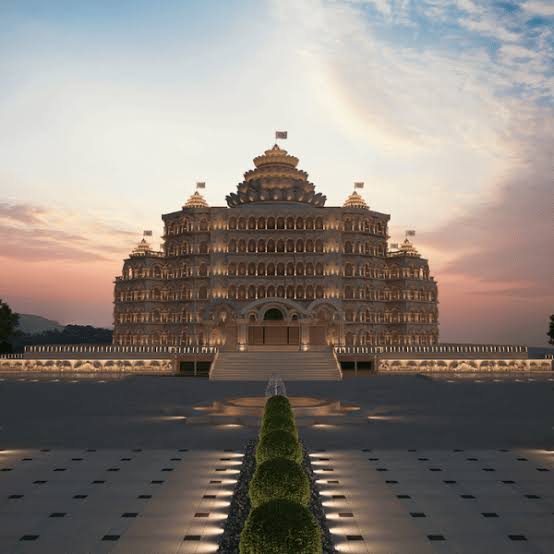
Vihangam Yoga is an Indian spiritual tradition of meditation founded in 1924 by Sadguru Sadafal Deo Ji Maharaj. Rooted in the philosophy of Brahma Vidya, it focuses on controlling the mind, developing inner awareness, and pursuing spiritual self-realisation. The tradition is associated with Jhusi, Prayagraj, where its principal ashram is located, and has expanded internationally through meditation centres, spiritual gatherings, and teacher-led initiation. Its principal spiritual text, Swarved, explains its philosophy and meditative ideals. The organisation has an international presence, with sources reporting centres across numerous countries. To understand its origins and teachings, explore Vihangam Yoga on Wikipedia alongside the organisation’s official resources.
Table of Contents
Vihangam Yoga: Quick Facts
| Category | Details |
|---|---|
| Founder | Sadguru Sadafal Deo Ji Maharaj |
| Founded | 1924 |
| Present Sadguru | Sadguru Swatantradeo Ji Maharaj |
| Spiritual successor | Sant Pravar Vigyan Deo Ji Maharaj is identified in affiliated materials as the Sadguru’s successor |
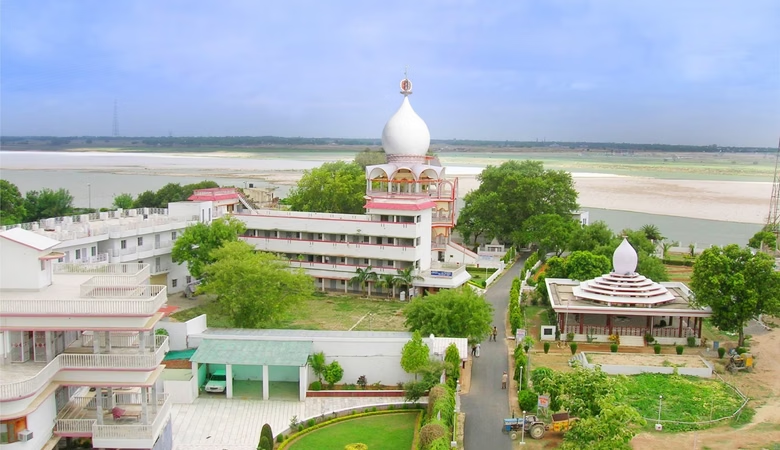
| Headquarters | Maharshi Sadafal Deo Ashram, Jhusi, Prayagraj, Uttar Pradesh |
| Main scripture | Swarved |
| International presence | Wikipedia reports branches in 50+ countries; the official organisation’s About page gives a different figure |
| UN ECOSOC status | Special consultative status reported from 2013 |
Note: International reach figures vary between sources. For current organisational details and titles, consult the official Vihangam Yoga website and its affiliated international institute.
What Is Vihangam Yoga? Meaning and Philosophy
The term Vihangam Yoga combines the Sanskrit-derived words vihag, meaning “bird,” and yog, meaning “union.” According to the North America Institute’s explanation of Vihangam Yog, the name represents the “bird’s path” towards union between the individual soul and the Supreme Being.
The bird analogy describes a soul rising beyond its attachment to the material world, much as a bird flies freely above the ground. Within this philosophy, spiritual progress involves turning awareness inward rather than remaining absorbed in sensory experiences, restless thoughts, and temporary desires.
Vihangam Yoga is presented by its practitioners as a form of Brahma Vidya, or spiritual knowledge concerned with consciousness and self-realisation. Its goal extends beyond physical flexibility or relaxation. It seeks to help practitioners understand their inner nature and develop a deeper spiritual relationship with the Supreme Consciousness.
For this reason, Vihangam Yoga combines meditation with spiritual instruction, ethical living, devotion, and guidance from a qualified Sadguru. The bird-path metaphor is central to understanding why this tradition emphasises inner freedom rather than physical postures alone.
History and Founder of Vihangam Yoga
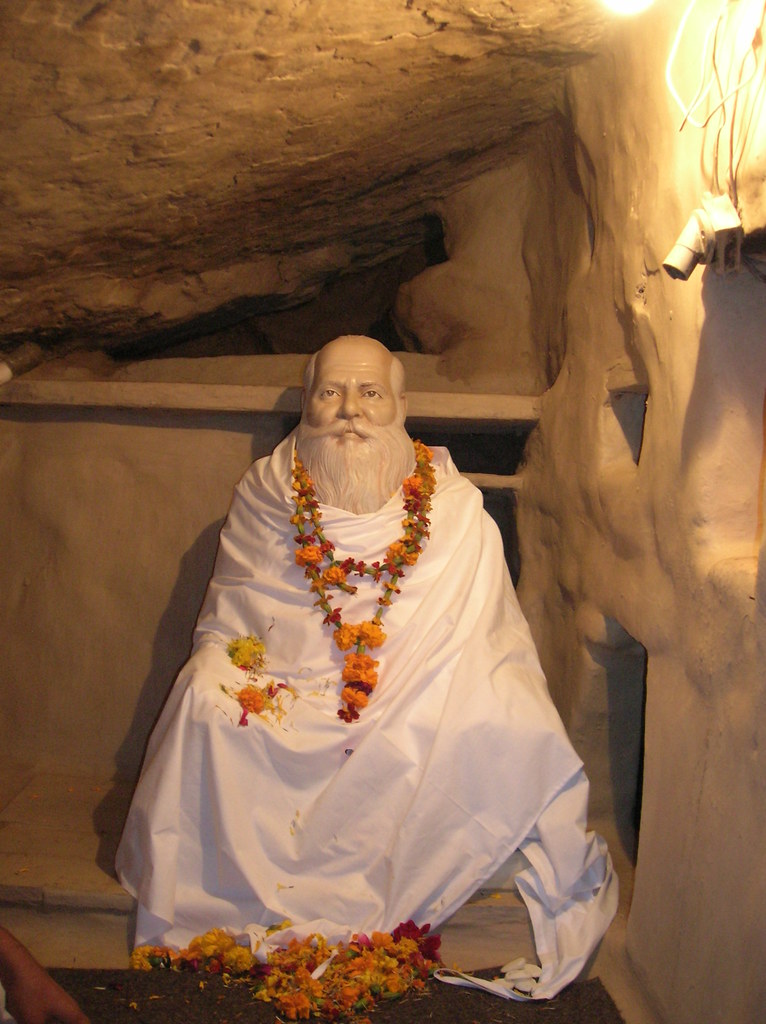
The history of Vihangam Yoga is closely associated with Sadguru Sadafal Deo Ji Maharaj, its founder. According to the tradition’s official accounts, he devoted many years to spiritual seeking and meditation before re-establishing the practice of Brahma Vidya under the name Vihangam Yoga.
The organisation was founded in 1924. Its teachings emphasised direct meditation practice, control of the mind, spiritual knowledge, and the guidance of a Sadguru. Rather than treating yoga exclusively as physical exercise, Sadguru Sadafaldeo Ji Maharaj presented it as a path towards understanding consciousness and realising the soul’s spiritual nature.
The tradition identifies Jhusi, near Prayagraj in Uttar Pradesh, as an important centre of the founder’s spiritual life and the organisation’s development. Accounts associated with the movement describe his meditation and spiritual practice in Jhusi beginning in 1921. The ashram subsequently became a centre for teaching, gatherings, and the continuation of the lineage.
Sadguru Sadafal Deo Ji Maharaj left his mortal body in 1954. The spiritual succession continued through Sadguru Dharmachandra Deo Ji Maharaj and later Sadguru Swatantradeo Ji Maharaj. Affiliated international materials also identify Sant Pravar Vigyan Deo Ji Maharaj as the Sadguru’s successor. Current titles and responsibilities should be confirmed through the organisation’s latest official communications.
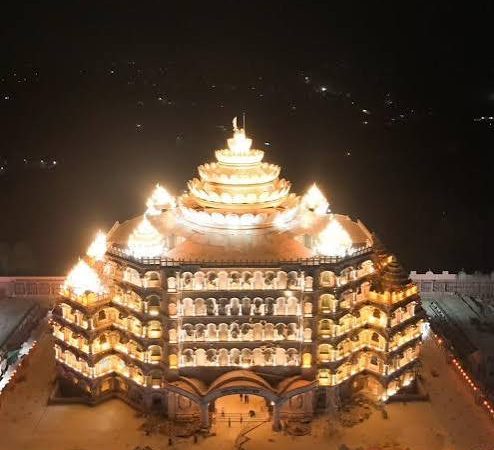
The movement’s centenary celebrations were associated with the inauguration of Swarved Mahamandir in Umraha, Varanasi, in 2023, marking the organisation’s 100th annual celebration. The monumental meditation centre represents the continuing importance of Swarved and the tradition’s efforts to share its teachings with a wider audience.
Today, Vihangam Yoga continues through ashrams, meditation centres, spiritual discourses, and initiation programmes in India and abroad.
Core Principles of Vihangam Yoga
The official What is Vihangam Yog page describes the tradition as a spiritual discipline focused on consciousness, mind control, and union with the Supreme Being. Its central principles can be summarised as follows.
- Control of the mind: Practitioners aim to develop awareness of mental restlessness and learn to direct attention more steadily.
- Self-realisation: The tradition encourages seekers to look beyond bodily identity and ordinary thoughts to understand their spiritual nature.
- Brahma Vidya: Spiritual knowledge is considered essential to understanding consciousness and progressing towards the tradition’s ultimate spiritual goal.
- Guidance of the Sadguru: Personal instruction from a qualified spiritual master is central to learning the meditation method.
- Ethical and disciplined living: Regular practice, appropriate conduct, devotion, and self-discipline support spiritual development.
- Union with the Supreme: The ultimate goal, according to the tradition, is spiritual realisation and enduring peace through union with the Supreme Consciousness.
These principles explain why Vihangam Yoga is not simply a relaxation exercise. It is a structured spiritual path in which meditation, knowledge, personal discipline, and teacher-guided practice are interconnected.
How Vihangam Yoga Meditation Works
Vihangam Yoga meditation is a specialised contemplative practice taught within the tradition. Its stated purpose is to help practitioners direct their awareness inward, develop greater control over the mind, and progress towards spiritual realisation.
Unlike approaches based primarily on physical postures or general relaxation, this tradition places particular emphasis on consciousness and the relationship between the individual soul and the Supreme Being. Its philosophy describes spiritual progress as a movement beyond dependence on sensory impressions and habitual mental activity.
The organisation describes its practice as a form of concentrative meditation. However, the specific method should not be reconstructed from online descriptions or treated as a generic meditation routine. The actual technique is taught by the Sadguru or authorised teachers during diksha, the initiation process.
For beginners, the practical starting point is to learn about the tradition, attend an introductory gathering, and ask an authorised teacher about initiation. Students can then clarify the appropriate practice schedule, guidance available between sessions, and how progress is understood within the lineage.
Regular practice is important, but beginners should avoid assuming that a particular duration or experience guarantees spiritual attainment. Individual experiences differ, and the tradition’s spiritual claims should be understood in their own religious context.
How to Learn Vihangam Yoga: Diksha and Initiation
For people interested in learning Vihangam Yoga, the recommended starting point is an authorised centre or teacher. The official Vihangam Yoga website provides organisational information and contact details for the Jhusi ashram. Its affiliated North America Institute also advises new seekers to contact instructors and receive initiation.
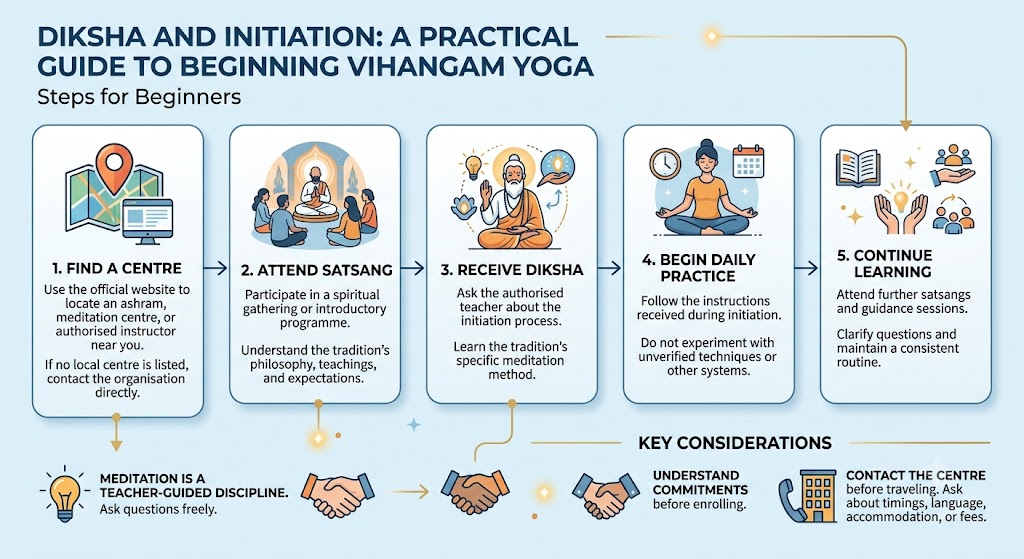
A practical beginner’s pathway is:
- Find a centre: Use the official website to locate an ashram, meditation centre, or authorised instructor near you. If no local centre is listed, contact the organisation directly.
- Attend satsang: Participate in a spiritual gathering or introductory programme to understand the tradition’s philosophy, expectations, and teachings.
- Receive diksha: Ask the authorised teacher about the initiation process, eligibility, schedule, and any arrangements required. Diksha introduces the practitioner to the tradition’s meditation method.
- Begin daily practice: Follow the instructions received during initiation rather than experimenting with unverified techniques from videos or unrelated meditation systems.
- Continue learning: Attend further satsangs or guidance sessions to clarify questions and maintain a consistent routine.
The exact arrangements may differ by location, so this sequence is a practical guide rather than a guarantee that every centre follows identical procedures. Contact the centre before travelling, especially if you need information about language, timings, accommodation, or programme fees.
Diksha is significant because the tradition regards meditation as a teacher-guided spiritual discipline. Beginners should ask questions freely and understand the practical commitments before enrolling.
Vihangam Yoga Benefits: What Does Research Say?
People explore Vihangam Yoga for different reasons, including mental calm, concentration, personal discipline, and spiritual growth. Its benefits should be discussed carefully, distinguishing personal experiences and traditional beliefs from findings supported by scientific research.
A relevant study published in Perceptual and Motor Skills in 2010 examined 15 Vihangam Yoga practitioners with more than ten years of experience and compared them with matched controls. Researchers administered several tests, including the Stroop, Trail-Making, and Digit Symbol Substitution tests. The practitioner group performed significantly better on the attention measures assessed.
This finding is encouraging, but it has limitations. The sample was small, and the study compared existing long-term practitioners with controls rather than randomly assigning participants to a meditation programme. It therefore cannot establish that Vihangam Yoga alone caused the differences, nor does it prove that everyone will experience the same effects.
More broadly, research on meditation suggests that some practices may help people manage stress, improve aspects of attention, and support emotional well-being. Outcomes depend on the method, frequency, individual circumstances, and quality of the evidence.
Traditional accounts also describe spiritual benefits such as self-realisation, inner freedom, and union with the Supreme. These are meaningful within the tradition but are not equivalent to clinically demonstrated health outcomes.
Important: Vihangam Yoga should not be presented as a proven cure for physical or mental illnesses. It may complement a balanced lifestyle, but it should not replace appropriate medical care or evidence-based treatment.
Swarved: The Main Scripture of Vihangam Yoga
Swarved is the principal spiritual text associated with Vihangam Yoga. Attributed to Sadguru Sadafal Deo Ji Maharaj, it presents teachings on consciousness, the mind, spiritual discipline, devotion, and the journey towards self-realisation. The affiliated North America Institute describes it as a detailed account of the spiritual experiences associated with meditation.
For practitioners, Swarved serves as a philosophical guide rather than simply a book of general meditation instructions. Its teachings help explain the tradition’s understanding of the soul, the mind, and the relationship between individual consciousness and the Supreme Being.
The text is also closely connected with the movement’s major spiritual centres. The best-known example is Swarved Mahamandir, in Umraha, Varanasi. Its architecture incorporates verses from the text and symbolises the organisation’s commitment to spiritual education and meditation.
Readers who are new to Vihangam Yoga can begin by exploring the text’s context, learning about its author, and attending an introductory satsang. Interpretations of its spiritual teachings are best understood alongside guidance from knowledgeable teachers within the tradition.

Major Vihangam Yoga Ashrams and Centres
The Vihangam Yoga network includes ashrams and meditation centres that host spiritual gatherings, provide opportunities for learning, and connect practitioners with teachers. The following locations are useful starting points for visitors.
| Ashram or centre | Location and official link |
|---|---|
| Swarved Mahamandir | Umraha, Varanasi, Uttar Pradesh. A major meditation centre associated with the Swarved scripture. |
| Sadafal Deo Ashram, Jhusi | Chatnag Road, Jhusi, Prayagraj, Uttar Pradesh. An important centre associated with the founder and the organisation’s headquarters. |
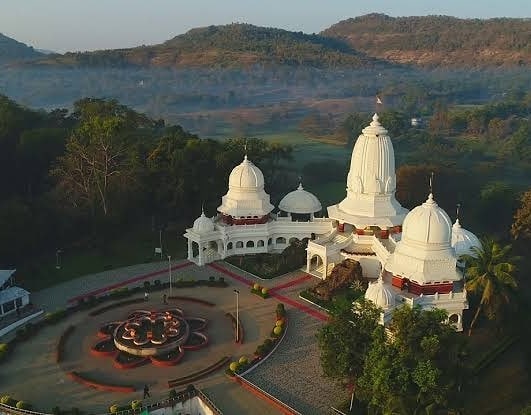
| Dandakvan Ashram | Vansda, Gujarat. An ashram serving practitioners in western India. |
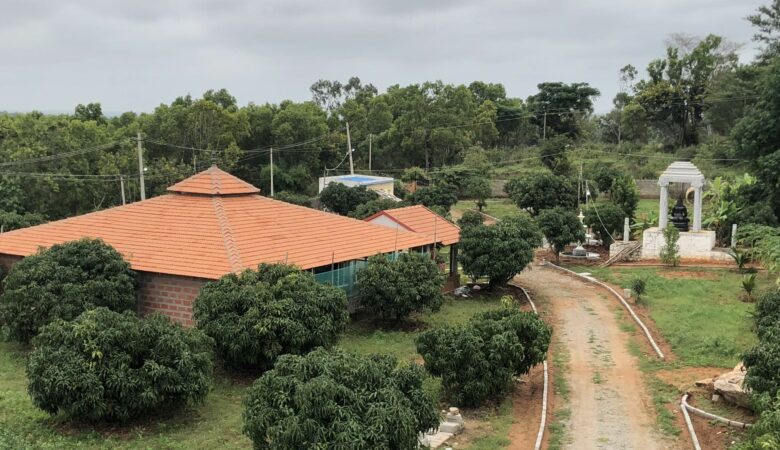
| Maharshi Sadafaldeo Ashram | Katar, Dehri-on-Sone, Bihar. Contact the organisation to confirm current visitor arrangements. |
| North America Institute of Vihangam Yoga | An international institute providing information about teachings, initiation, and activities in North America. Official website. |
The official organisation’s website provides information about the Jhusi ashram, Swarved Mahamandir, and Dandakvan Ashram.
Before visiting, confirm opening arrangements, event schedules, accommodation availability, and whether advance registration is required. An ashram may have different arrangements for casual visitors, initiated practitioners, and people attending special programmes.
Vihangam Yoga vs Other Meditation Styles
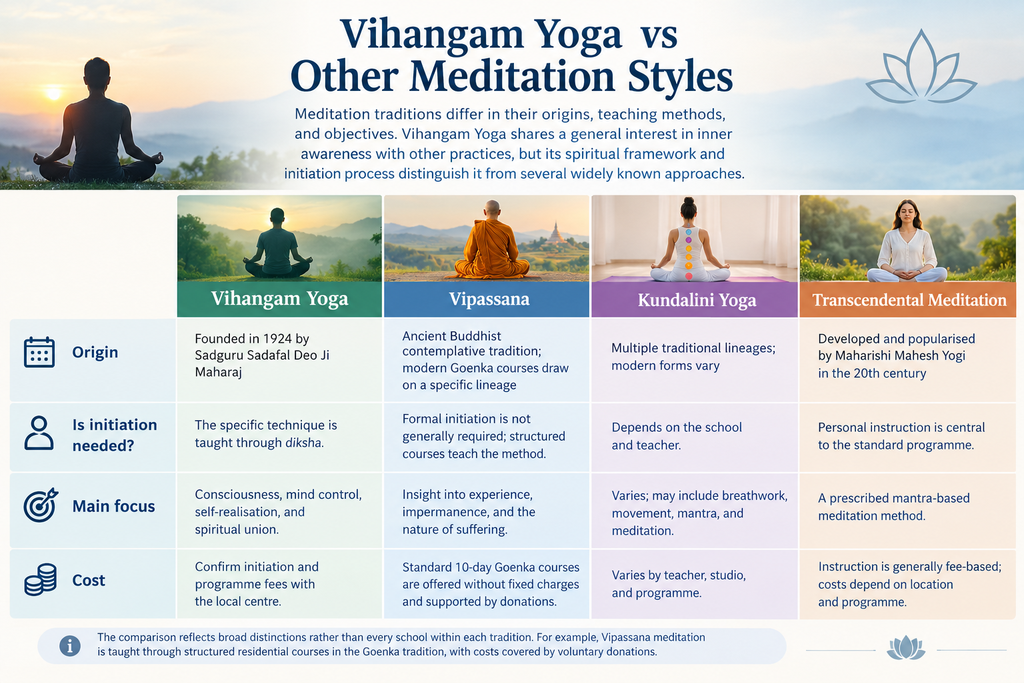
Meditation traditions differ in their origins, teaching methods, and objectives. Vihangam Yoga shares a general interest in inner awareness with other practices, but its spiritual framework and initiation process distinguish it from several widely known approaches.
| Feature | Vihangam Yoga | Vipassana | Kundalini Yoga | Transcendental Meditation |
|---|---|---|---|---|
| Origin | Founded in 1924 by Sadguru Sadafal Deo Ji Maharaj | Ancient Buddhist contemplative tradition; modern Goenka courses draw on a specific lineage | Multiple traditional lineages; modern forms vary | Developed and popularised by Maharishi Mahesh Yogi in the 20th century |
| Is initiation needed? | The specific technique is taught through diksha | Formal initiation is not generally required; structured courses teach the method | Depends on the school and teacher | Personal instruction is central to the standard programme |
| Main focus | Consciousness, mind control, self-realisation, and spiritual union | Insight into experience, impermanence, and the nature of suffering | Varies; may include breathwork, movement, mantra, and meditation | A prescribed mantra-based meditation method |
| Cost | Confirm initiation and programme fees with the local centre | Standard 10-day Goenka courses are offered without fixed charges and supported by donations | Varies by teacher, studio, and programme | Instruction is generally fee-based; costs depend on location and programme |
The comparison reflects broad distinctions rather than every school within each tradition. For example, Vipassana meditation is taught through structured residential courses in the Goenka tradition, with costs covered by voluntary donations.
Similarly, Kundalini yoga is a broad label encompassing approaches that may combine movement, breathing, chanting, and meditation. Its teaching and initiation requirements vary by lineage.
Vihangam Yoga places particular emphasis on a Sadguru-guided meditation technique and the philosophical teachings of Swarved. Anyone comparing traditions should consider the teaching method, personal spiritual goals, accessibility, and practical commitments rather than assuming all meditation practices are interchangeable.
Conclusion:
Vihangam Yoga combines meditation, spiritual knowledge, disciplined living, and Sadguru-guided initiation in a tradition established by Sadguru Sadafal Deo Ji Maharaj in 1924. Its teachings and Swarved remain central to its spiritual identity. To explore further, visit Swarved Mahamandir, Sadafal Deo Ashram, Jhusi, and Dandakvan Ashram.
FAQs:
Q. What is Vihangam Yoga?
A. Vihangam Yoga is an Indian spiritual meditation tradition focused on controlling the mind, developing inner awareness, and pursuing self-realisation. Founded in 1924, it is associated with the philosophy of Brahma Vidya and the spiritual text Swarved.
Q. Who is the founder of Vihangam Yoga?
A. Sadguru Sadafal Deo Ji Maharaj founded Vihangam Yoga in 1924. His teachings established the foundation for the organisation’s meditation practice, spiritual philosophy, and continuing teacher-disciple tradition.
Q. Who is the present Sadguru of Vihangam Yoga?
A. The organisation’s official About page identifies Sadguru Swatantradeo Ji Maharaj as the present Sadguru. Affiliated international materials identify Sant Pravar Vigyan Deo Ji Maharaj as his successor. For current titles and responsibilities, check the latest official announcements.
Q. How can I learn Vihangam Yoga?
A. Start by visiting the official Vihangam Yoga website, contacting a nearby centre, or attending a satsang. Ask an authorised teacher about diksha, the meditation method, practice requirements, and any programme arrangements. Follow the instructions given during initiation.
Q. Is Vihangam Yoga free?
A. Costs can depend on the centre and the type of programme. Do not assume that initiation, accommodation, special events, or every course is free. Contact the relevant ashram for current fees, donations, and other arrangements before enrolling.
Q. What is Swarved?
A. Swarved is the principal spiritual scripture associated with Vihangam Yoga and attributed to its founder, Sadguru Sadafal Deo Ji Maharaj. It discusses consciousness, the mind, devotion, meditation, and spiritual realisation. Swarved Mahamandir in Varanasi is dedicated to this text and its teachings.
Q. Where is the main Vihangam Yoga ashram?
A. The principal ashram is Maharshi Sadafal Deo Ashram on Chatnag Road in Jhusi, Prayagraj, Uttar Pradesh. Visitors can check contact information and travel details through the official organisation website. Swarved Mahamandir in Umraha, Varanasi, is another major spiritual destination.
Q. Is Vihangam Yoga different from Vipassana?
A. Yes. Both involve meditation, but they differ in philosophy and teaching methods. Vihangam Yoga emphasises Sadguru-guided initiation, Brahma Vidya, and spiritual union with the Supreme Being. Vipassana, particularly in the Goenka tradition, teaches systematic observation of experience and insight through structured courses. Each should be understood within its own tradition.