
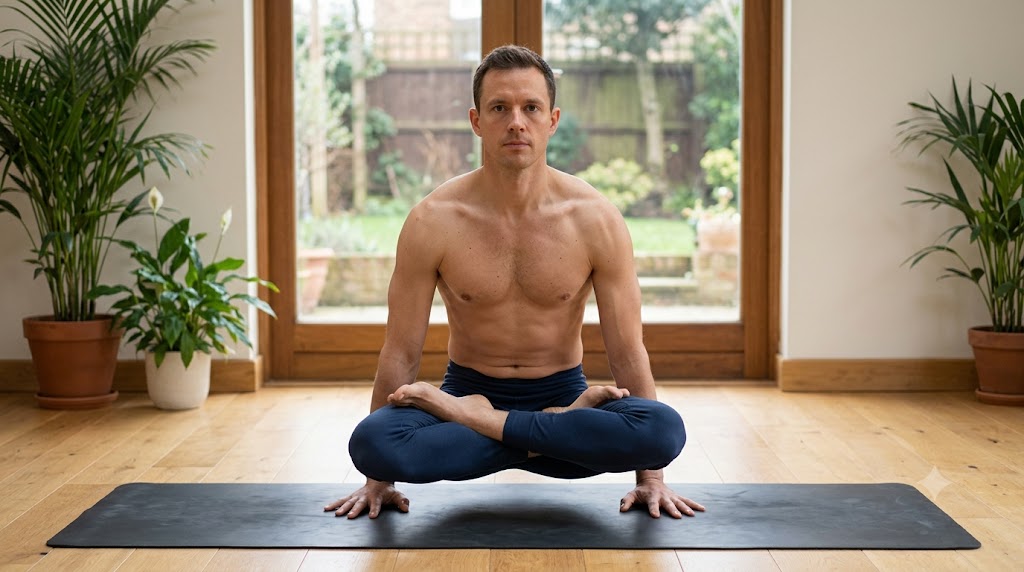
Brahmacharyasana, also known as Celibate’s Pose, is a seated yoga posture associated with the yogic principle of brahmacharya, using physical, mental, and emotional energy with awareness and moderation.
The name and traditional descriptions of Brahmacharyasana are associated with conserving and directing energy inward. Today, the pose can be approached more simply as a practice of steadiness, body awareness, concentration, and mindful breathing.
Table of Contents
What Is Brahmacharyasana?
Traditional yoga teachings also associate Brahmacharyasana with the practice of brahmacharya and the conscious direction of energy. These are philosophical and traditional interpretations rather than claims that the pose can directly treat a medical condition.
There are different versions of Brahmacharyasana described in yoga traditions. This article covers the two variations traditionally presented here and explains how to practice them more safely and comfortably.
The word Brahmacharyasana comes from brahmacharya and asana.
- Brahmacharya is traditionally associated with self-restraint, moderation, and conscious use of one’s energy. It is sometimes translated as celibacy, but the concept can also be understood more broadly as directing attention and vitality toward meaningful goals rather than excess or distraction.
- Asana means a posture or seat.
In simple terms, Brahmacharyasana can be understood as a posture that encourages steadiness, self-awareness, and mindful use of energy.
Brahmacharyasana should not be presented as a treatment for nightmares, sexual problems, infertility, digestive disorders, belly fat, or other medical conditions.
Brahmacharya and Ojas: What Does “Energy Transformation” Mean?
Traditional yoga and Ayurveda use the term ojas to describe a subtle form of vitality or vital essence. In some traditional teachings, disciplined use of physical and mental energy is said to support the development or preservation of ojas.
This is best understood as a traditional yogic concept rather than a medically measurable process. The idea of “energy transformation” does not mean that sexual energy literally changes into a substance that can be measured in the body. Instead, it describes the traditional belief that disciplined habits, meditation, breathwork, and yoga can help a person feel more focused, steady, and purposeful.
For a modern practitioner, the practical takeaway is simple: use your energy consciously, avoid excess, and cultivate concentration and balance.
Preparatory Poses for Doing Brahmacharyasana:
Step-by-Step Instructions To Practice Brahmacharyasana
There are a total of 2 versions of the Brahmacharyasana or Celibate’s Pose. Today, I am going to provide the steps of both versions of the Brahmacharyasana or Celibate’s Pose below:
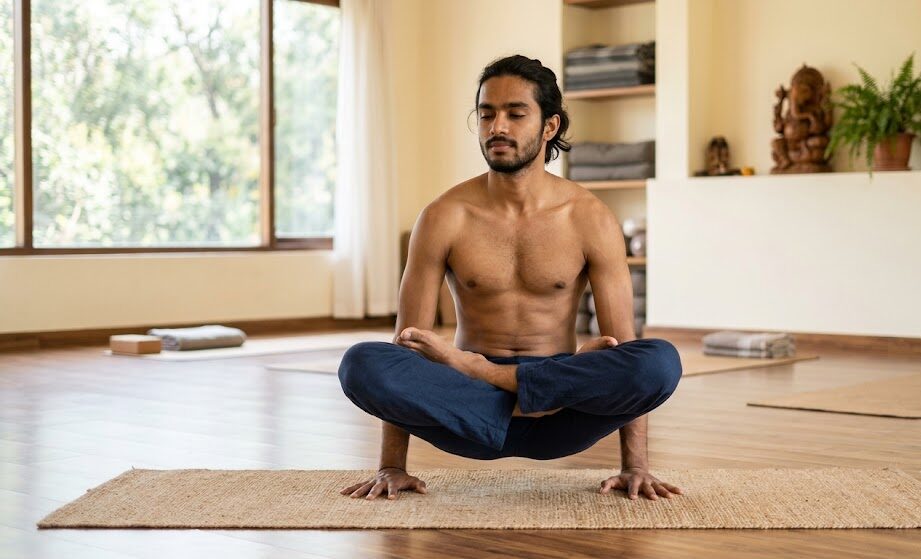
First Version Of The Brahmacharyasana or Celibate’s Pose:
This variation requires considerable strength in the arms, shoulders, core, and legs.
- Sit on the floor with both legs extended straight in front of you, similar to Dandasana.
- Place your palms on the floor beside your hips. Keep the fingers pointing forward or in a comfortable direction that does not strain your wrists.
- Lengthen your spine and engage your abdomen and legs gently.
- Press your palms firmly into the floor.
- If you are able to do so without straining, lift your hips and legs slightly away from the floor.
- Keep your shoulders stable and your chest open without forcing the posture.
- Keep your gaze steady and your neck relaxed.
- Breathe slowly and continuously. Do not hold your breath.
- Hold the pose for 30–60 seconds, or less if you are a beginner.
- Slowly lower your hips back to the floor while exhaling.
- Rest for a few breaths before repeating.
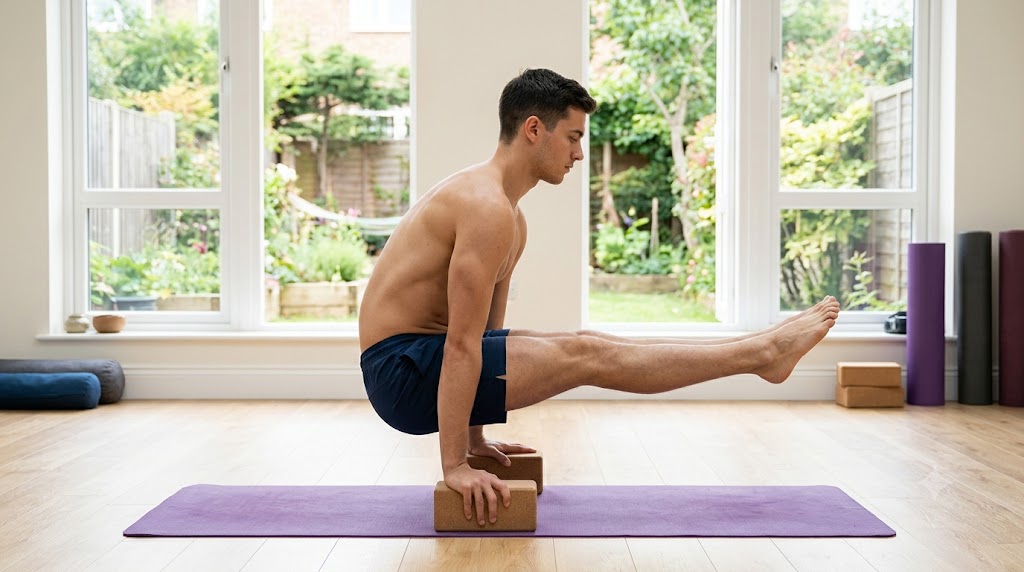
Second Version Of the Brahmacharyasana or Celibate’s Pose:
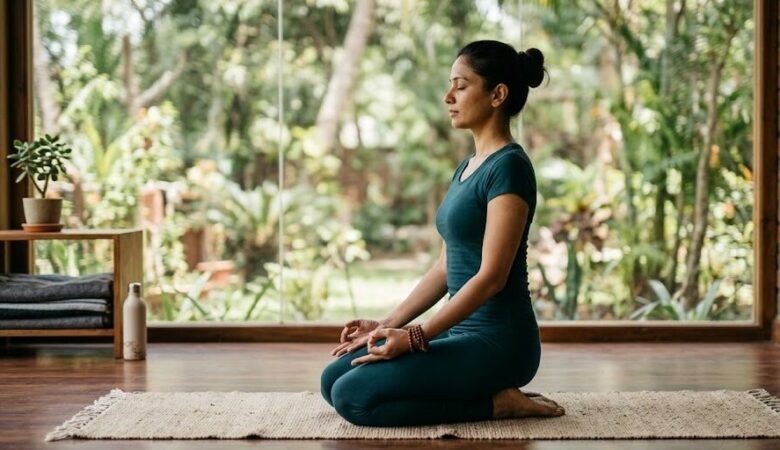
The second variation is a seated posture in which the legs are folded and the practitioner sits between the feet. Because this position can place significant demands on the knees, ankles, hips, and thighs, do not force the legs into position.
- Kneel on a yoga mat or folded blanket.
- Slowly separate your feet and lower your hips toward the space between them.
- Keep your knees comfortable and avoid forcing them wider than feels natural.
- If your hips do not comfortably reach the floor, place a yoga block, cushion, or folded blanket underneath you.
- Keep your spine upright and relaxed.
- Rest your hands on your knees or thighs, with your palms facing upward or downward.
- If comfortable, bring the tip of the index finger and thumb together to form a simple mudra.
- Relax your shoulders and jaw.
- Breathe slowly through the nose without holding your breath.
- Hold for 30–60 seconds, then gradually return to a comfortable kneeling or seated position.
You can practice up to 3 rounds, resting between rounds as needed. There is no need to force yourself to remain in the pose for five minutes. Longer holds are appropriate only when the posture is comfortable and well established.
Breathing Pattern During Brahmacharyasana
Breathing should remain slow, smooth, and natural throughout the pose.
- Inhale: Lengthen the spine and maintain a steady posture.
- Exhale: Relax unnecessary tension in the shoulders, face, and hips.
- Continue breathing normally while holding the pose.
- Do not deliberately hold your breath, especially if you feel light-headed, uncomfortable, or strained.
The original instructions for this pose included breath retention. For a general yoga practice, continuous, comfortable breathing is a safer approach than forcing a breath hold.
Beginner Version and Props
Brahmacharyasana does not need to be performed at its most demanding level.
For Version 1:
Beginners can:
- Keep the hips on the floor instead of lifting them.
- Practice pressing the hands into the floor while engaging the core.
- Lift the hips only a small amount rather than trying to fully raise the body.
- Use yoga blocks under the hands if additional height makes the movement more comfortable.
- Practice for 10–20 seconds initially and gradually increase the hold.
For Version 2:
Beginners can:
- Sit on a folded blanket or firm cushion.
- Place a yoga block or bolster underneath the hips.
- Avoid forcing the knees toward the floor.
- Practice a comfortable seated variation before attempting the deeper position.
Props are not a sign that you are doing the pose incorrectly. They can make the posture more accessible while reducing unnecessary strain.
Follow-Up Poses Of Brahmacharyasana:
After Brahmacharyasana, use gentle poses to release areas that may have worked hard.
- Balasana (Child’s Pose)
- Shavasana (Corpse Pose)
- Marjaryasana–Bitilasana (Cat–Cow Pose)
- Sukhasana (Easy Pose)
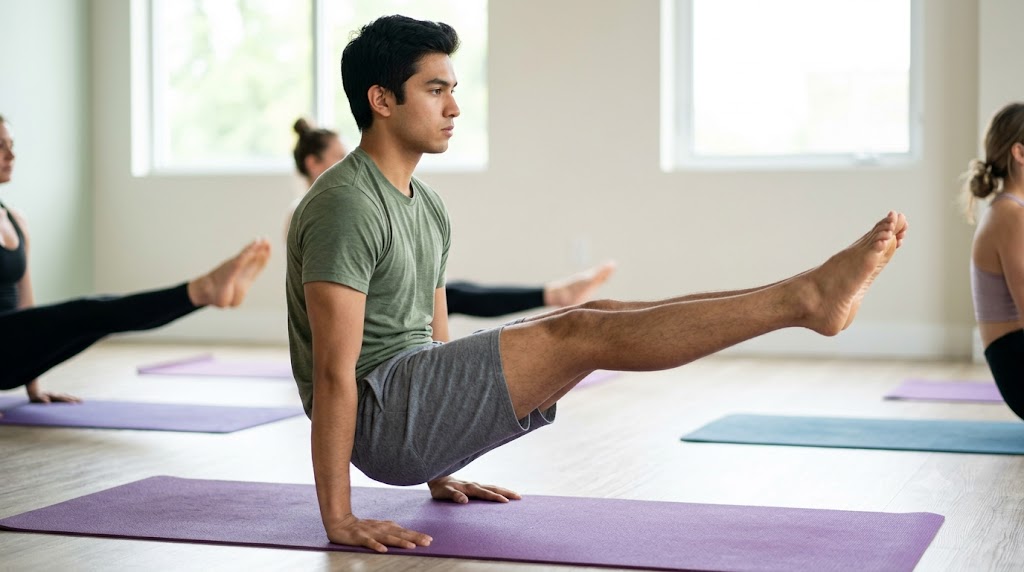
Benefits Of Brahmacharyasana:
With regular, mindful practice, Brahmacharyasana may help develop:
- This posture helps blood circulation smoothly to improve it.
- This posture helps to get you relief from pain and makes you very comfortable. This is one of the Brahmacharya benefits.
- If any unpleasant event is not being tried even after so many attempts, then a person can forget the incident by practicing this asana for a few days.
- With this posture, the expressions of sexuality are lost in Brahmacharya seekers, and Brahmacharya can also be controlled.
- This posture brings great benefits in youth; it can help to get rid of problems like nightmares, bad thoughts, and stress in the brain.
- People over fifty years old can achieve superhuman strength with this posture.
- This posture benefits both men and women both physically and mentally.
- This seat inserts the mind and allows you to improve your mental health
- This posture helps to get rid of knee pain effectively in a few days after practicing this asana on a daily basis
- After eating dinner at night, practicing this asana for 5 minutes before sleep is not a dream flaw.
- With the practice of this asana, the flow of semen and vascular flows sooner upwards, and the heat of the pulse decreases, from which this asana has proved to be the ultimate benefit for removing bad dreams.
- Individuals who have frequent Nightmares should practice this asana for 5 to 10 minutes before sleeping. With this, there is considerable strength in the upstream sense, and concentration also increases.
- Due to the regular practice of this asana, belly fat melts quickly.
- This asana promotes way better digestion when practiced on a daily basis. That is why people practice this asana even after a meal since this asana helps to improve the digestive system.
Precautions & Contraindications:
Brahmacharyasana is not suitable for everyone, and the two variations have different physical demands.
Pregnancy:
If you are pregnant, avoid attempting the traditional versions without guidance from a qualified prenatal yoga instructor and approval from your healthcare provider. Pregnancy can require modifications to yoga postures, and some positions may become uncomfortable or unsuitable as pregnancy progresses.
Low Blood Pressure:
If you have low blood pressure or tend to become dizzy or light-headed, use extra caution. Move slowly when entering and leaving the pose, breathe normally, and stop if you feel faint.
Leg or Hip Injury:
Avoid the pose or seek professional guidance if you have a current injury involving the knees, ankles, hips, thighs, or legs. The folded-leg version can place considerable stress on these areas.
Spine Injury:
If you have a current or significant back or spinal injury, consult a qualified healthcare professional before practicing Brahmacharyasana. Do not force the spine into an upright position if doing so causes pain.
Other Precautions:
Stop the practice if you experience:
- Sharp or worsening pain
- Numbness or tingling
- Dizziness or faintness
- Difficulty breathing
- Significant pressure or pain in the knees, hips, wrists, or spine
Yoga is generally considered safe when practiced appropriately, but injuries can occur, particularly when postures are forced or performed incorrectly. People with injuries or health conditions may need to modify or avoid certain poses.
Conclusion:
Brahmacharyasana can be approached as more than a physical posture. Its traditional association with brahmacharya encourages practitioners to develop moderation, concentration, and awareness of how they use their energy.
Rather than forcing the pose or chasing a specific physical or sexual effect, practice it with steady breathing, comfortable alignment, and respect for your body’s limits. Start with a beginner modification when needed and gradually build strength and mobility over time.
FAQs:
Q. What does Brahmacharyasana mean?
A. Brahmacharyasana means the asana or posture associated with brahmacharya. Brahmacharya is traditionally linked with self-restraint, moderation, and the conscious direction of physical and mental energy. It is sometimes translated as celibacy, but its meaning in yoga can be broader than sexual restraint alone.
Q. Is Brahmacharyasana hard for beginners?
A. Version 1 can be challenging for beginners because it requires strength in the arms, shoulders, core, and legs. Start with a supported or partial lift rather than trying to hold the full pose.
Version 2 may look easier, but it can be demanding for people with limited hip, knee, or ankle mobility. Use a cushion or yoga block and never force the knees or hips.
Q. How long should I hold Brahmacharyasana?
A. Start with 30 seconds and gradually work toward 60 seconds if the pose remains comfortable. You can practice up to 3 rounds, resting between rounds.
Q. Who should not do Brahmacharyasana?
A. People who are pregnant, have low blood pressure with a tendency toward dizziness, or have current leg, hip, knee, ankle, or spine injuries should use particular caution and seek appropriate professional guidance before practicing. Anyone who experiences pain, dizziness, numbness, or breathing difficulty should stop.
Q. Is Brahmacharyasana the same as Vajrasana?
A. No. Vajrasana is a kneeling seated posture, while Brahmacharyasana has different traditional variations, including a more physically demanding version in which the body is lifted using the arms. The two poses should not be treated as interchangeable.