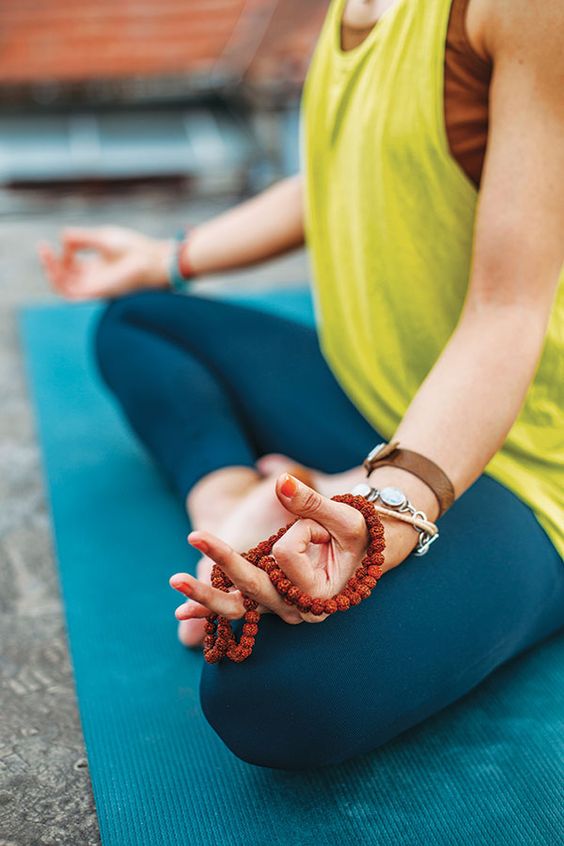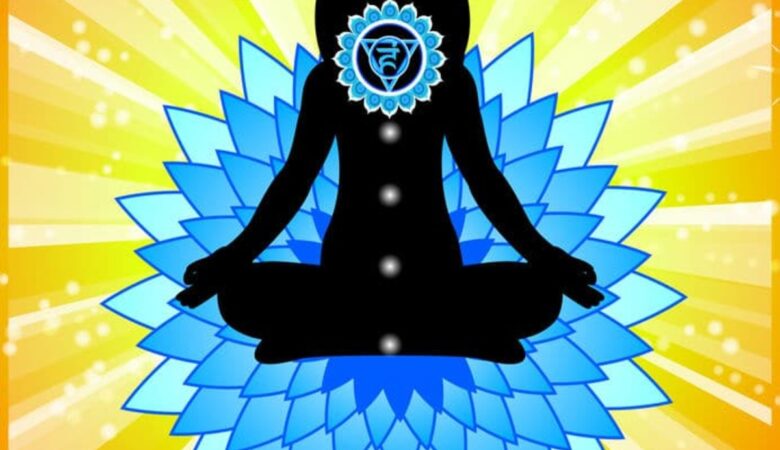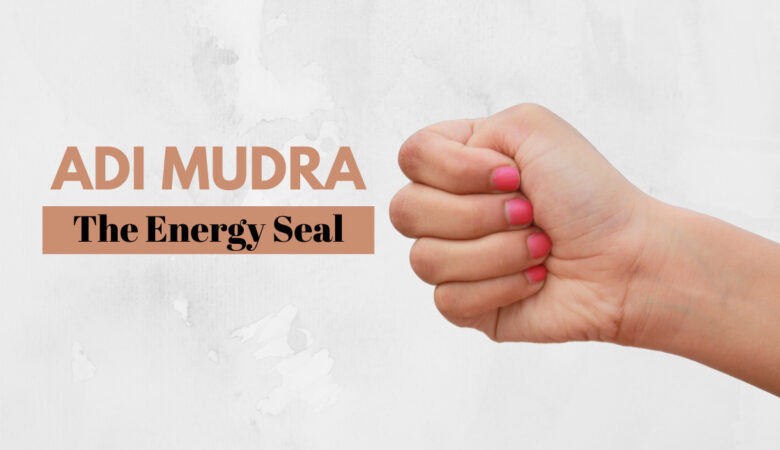

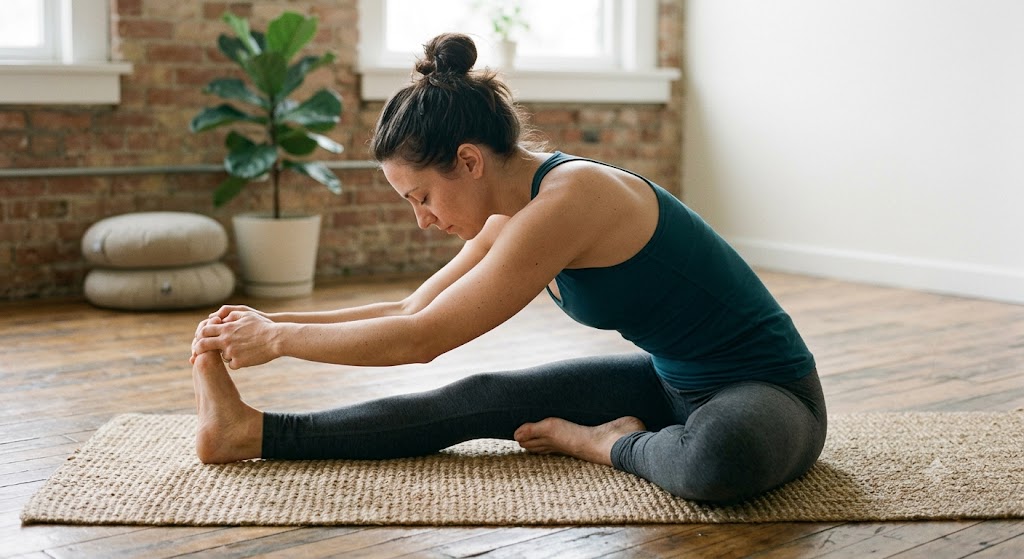
Maha Mudra is a group of teachings found in many Tibetan Buddhist sects in which we ourselves are taught how to understand the true nature of our mind, resulting in enlightenment. Different methods may have been adopted to achieve this objective, but the practice of understanding the true nature of our mind by adopting any method can make our life very meaningful.
Table of Contents
What Does Maha Mudra Mean?
The word Maha Mudra Pose has come from the Sanskrit language, which means “Great Gesture”. It refers to an advanced and complex cultivation method of meditating on the nature of the mind and the realization arising from it. Just as wax currency or a seal is inscribed to authenticate the signature on legal documents, the seal of Maha Mudra is inscribed on authentic practices that provide enlightenment for the betterment of all beings.
Maha Mudra meditation is a very effective way to get rid of these sorrows, but it is possible only when this meditation is based on very firm grounds. This means that progress in this direction requires extensive cultivation of the entire gradual path of Lam-Rim.
Maha Mudra in Classical Yoga Texts
Maha Mudra, often translated as the “Great Seal,” is a traditional Hatha Yoga practice combining a seated posture, controlled breathing, internal locks (bandhas), and focused awareness. It is described in classical yogic texts, including the Hatha Yoga Pradipika and the Gheranda Samhita.
Hatha Yoga Pradipika — Chapter 3
The Hatha Yoga Pradipika, Chapter 3, describes the posture and technique of Maha Mudra in verses 10–15 in the commonly used numbering.
A short translated excerpt from verse 13 reads:
“It should be expelled then, slowly only and not violently.”
— Hatha Yoga Pradipika, Chapter 3, Maha Mudra section (verse numbering may vary by edition).
This instruction emphasizes a key principle of the practice: the breath should be released gradually and without force. Traditional descriptions also discuss the role of Jalandhara Bandha and the balanced practice of both sides.
Gheranda Samhita — Chapter 3, Verses 6–8
The Gheranda Samhita also describes Maha Mudra in its third chapter, dedicated to mudras. Verses 6–7 describe pressing the heel near the perineum, extending the opposite leg, holding the foot, contracting the throat, and directing the gaze between the eyebrows. Verse 8 discusses traditional benefits.
Together, these texts establish Maha Mudra as a coordinated practice of posture, breath, concentration, and energetic control—not simply a forward bend.
Editorial note: Classical texts make traditional claims about healing and spiritual attainment. Present these as historical yogic teachings rather than medically proven outcomes.
How the Three Bandhas Work Together
Bandhas are traditionally described as internal locks that help direct and contain prana, or vital energy. In Maha Mudra, three bandhas are often discussed together, although their precise coordination depends on the lineage and level of practice.
Mula Bandha — Root Lock
Location: pelvic floor
A subtle engagement of the pelvic floor muscles. In traditional yoga, it is associated with grounding awareness and containing energy at the body’s base. Avoid forceful squeezing or bearing down.
Uddiyana Bandha — Abdominal Lock
Location: abdomen
Traditionally, Uddiyana Bandha involves drawing the abdomen inward and upward after exhalation. It is generally taught as a separate technique and should not be forced during internal breath retention.
Jalandhara Bandha — Throat Lock
Location: throat and neck
A gentle chin-and-neck position traditionally used during pranayama. Keep the neck long and avoid pressing the chin down aggressively.
How they complement one another
Mula Bandha: provides a subtle sense of grounding.
Uddiyana Bandha: is associated with upward abdominal movement and energetic lift.
Jalandhara Bandha: regulates the throat position during breath-control practices.
Together, the bandhas form a coordinated traditional system for directing prana and stabilizing attention. However, do not assume that all three must be maximally engaged at once. Uddiyana Bandha is usually practiced on an exhaled, empty-lung pause, whereas Maha Mudra instructions commonly include internal retention. Learn the techniques separately with a qualified teacher before attempting advanced combinations.
Preparatory Poses:
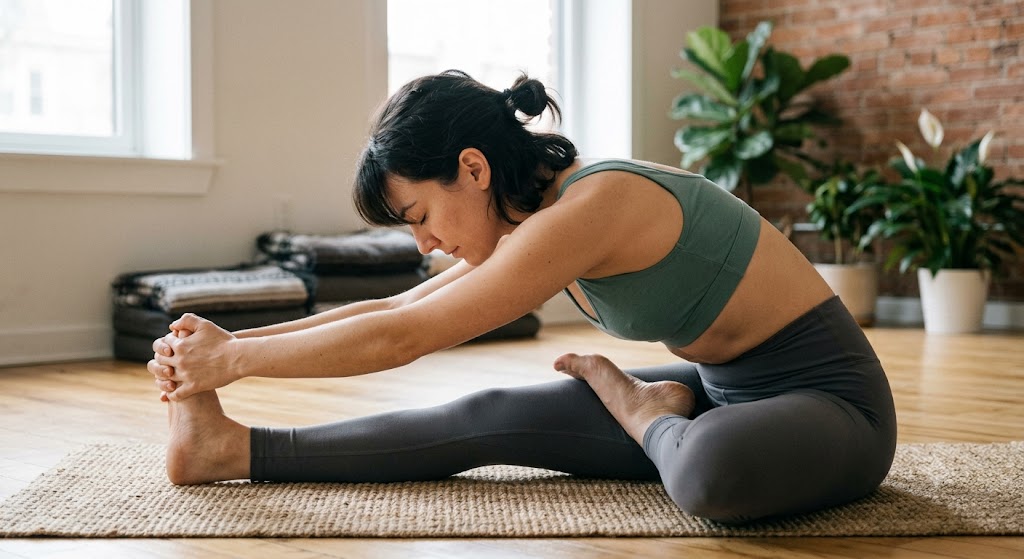
Preparing the hamstrings, hips, and spine can make the position more comfortable. Use these poses as gentle mobility exercises rather than trying to force a deep stretch.
Janu Sirsasana or Head-to-Knee Pose
Modifications and Props for Beginners
Not everyone can reach the extended foot or sit comfortably with one knee bent. Props can reduce unnecessary strain and make it easier to maintain an upright spine.
Folded Blanket:
Place a folded blanket under the sitting bones to elevate the hips. This may reduce posterior pelvic tilt and help you sit more upright.
Yoga Strap:
Loop a strap around the extended foot and hold it with both hands. Keep the elbows relaxed and avoid pulling the torso forward.
Bolster or Cushion:
Support the bent knee if it feels uncomfortable. Use a range of motion that does not cause joint pain.
If bending the knee or placing the heel near the perineum causes pain, do not force the traditional position. Practicing a modified Janu Sirsasana may be more appropriate until you have the mobility and instruction needed for Maha Mudra.
Breathing Technique: Antar Kumbhaka Step by Step
Antar Kumbhaka means internal breath retention—the pause after inhalation. In Maha Mudra, the timing of inhalation, retention, bandhas, and exhalation is important.
Step 1 — Establish a steady posture
Sit with one leg extended and the other bent in a comfortable, supported position. Lengthen the spine and relax the shoulders.
Step 2 — Inhale smoothly
Breathe in through the nose without lifting the shoulders or expanding the chest forcefully.
Step 3 — Introduce the internal pause only when trained
A trained practitioner may apply the prescribed bandhas and retain the breath briefly and comfortably. Beginners should skip retention and keep breathing normally.
Step 4 — Release gently
Release the locks in the order taught by your instructor, return the neck to neutral, and exhale slowly without pushing the air out.
Step 5 — Recover
Take a few natural breaths before repeating. Stop if you experience dizziness, breathlessness, pressure, or discomfort.
Important distinction: Classical instructions differ in their precise breathing sequence. The steps above explain internal retention as a concept, not a substitute for hands-on instruction in the traditional technique.
Never force a long breath hold or use a fixed retention ratio simply to achieve a target duration.
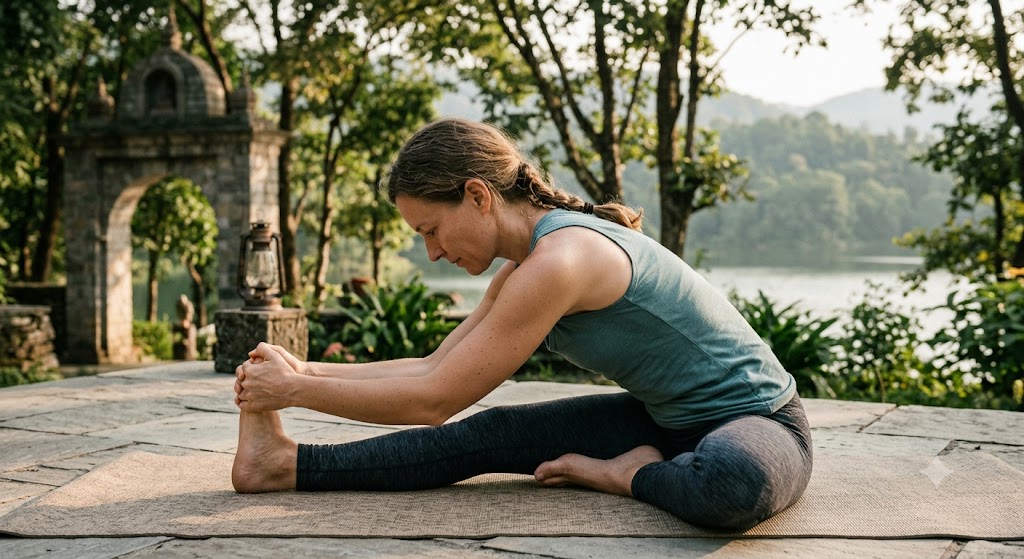
Step-by-Step Instructions to Do Maha Mudra:
- First of all, sit down with a pedestal
- Many parts of the body are affected in this asana.
- After this, spread both your legs, making sure that there is a distance between the two legs.
- Keep the spine straight and then keep the hands on the knee.
- After this, bend the right foot from the knee and close the heel with your thigh.
- Keep in mind that the sole of the right leg should be attached to the thigh.
- After this, raise your hands and breathe.
- Then attach the head to the left-side knee and hold the leg with your hands.
- This is the complete state of Maha Mudra.
- Now, while exhaling, rise straight and straighten the right leg.
- Come back to normal.
- Practice this asana again by changing legs.
Benefits of Mahamudra:
Maha Mudra is considered to be better than many other postures and pranayama. This happens because Maha Mudra makes you physically flexible, while postures also develop physical as well as mental powers.
Today we are telling you about Maha Mudra, which offers many types of benefits. By performing Maha Mudra, the Spinal nerve starts functioning properly. Mahamudra benefits can neutralize the effects of toxins in the body.
Also, it is helpful in providing peace of mind. Maha Mudra Asana removes excess fat in the body. So, let’s now know other Maha Mudra benefits…
- Regularly doing Maha Mudra posture reduces obesity and makes the stomach thinner.
- Piles, asthma, caries, leprosy, etc. are cured by doing this asana.
- Regular practice of the Mahamudra yoga posture makes the thigh, spine, shoulders, waist, and lungs strong.
- By taking Maha Mudra daily, the pains of the waist and feet disappear.
- If you do this posture daily, then soon the problem of dreaming is removed.
- By doing this, your body also gets energized.
- This asana is very useful for people who have diabetes and appendicitis.
- Laziness is also overcome by its regular practice.
- By doing this asana, the problems related to women’s menstruation of women is overcome.
- This asana is very beneficial to cure all stomach-related diseases.
When to Practice and How Many Rounds?
Early morning is a traditional choice because the stomach is usually empty and the surroundings may be quieter. Another suitable time is before meditation, provided you have not eaten recently and feel well.
Practice detail | Suggested starting guideline |
|---|---|
Best time | Morning, on an empty stomach |
Meal timing | Allow about 3–4 hours after a substantial meal |
Warm-up | 5–10 minutes of gentle mobility |
Beginner practice | 1–2 gentle repetitions per side, without retention or advanced bandhas |
Established practice | Work gradually toward 3–5 rounds per side if comfortable and appropriately instructed |
Recovery | Rest with normal breathing between repetitions |
The 3–5-round recommendation is a gradual practice target, not a requirement. The appropriate volume depends on experience, mobility, health, and the specific teaching tradition. Avoid progressing to advanced breath retention without supervision.
Breathing and Visualization
Maha Mudra combines physical positioning with internal attention. Visualization can support concentration, but it is optional and should never distract from safe breathing.
Try this gentle awareness sequence:
Before the pose: Sit quietly and notice your natural breath. Relax your jaw, shoulders, and abdomen.
During inhalation: Imagine the spine lengthening from the base toward the crown of the head.
During a comfortable pause, if trained: Rest your attention on the body’s central axis. Do not strain to create a particular sensation or energy movement.
During exhalation: Imagine releasing unnecessary tension from the shoulders, back, and face.
After each side: Breathe naturally and notice the difference between the two sides without judging it.
Traditional yoga may describe this internal focus through the language of prana and the central channel, or Sushumna Nadi. These are concepts within the yogic tradition, not claims that a measurable energy current has been scientifically established.
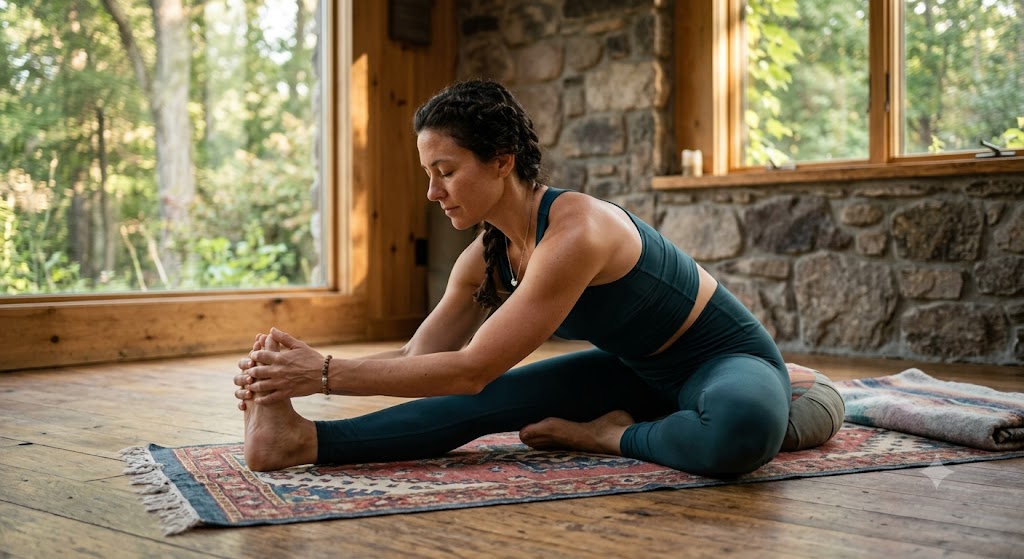
Precautions and Contraindications:
Maha Mudra combines a forward-folding posture with breath control and internal muscular engagement. The combination may not be suitable for everyone.
Consult a qualified healthcare professional before attempting the advanced form if you have a medical condition. Avoid the breath-retention and bandha components during pregnancy, with uncontrolled hypertension, significant heart disease, or glaucoma unless your treating clinician specifically clears the practice. Neck positioning and straining may also be inappropriate for some eye and cardiovascular conditions.
Use particular care with:
Pregnancy: Avoid the traditional advanced practice, particularly breath retention and abdominal pressure.
High blood pressure: Avoid forceful bandhas and breath-holding, especially if blood pressure is uncontrolled.
Heart conditions: Breath retention and straining may impose additional cardiovascular stress.
Glaucoma: Breath-holding and straining can affect intraocular pressure; seek advice from your ophthalmologist.
Back Injuries: Avoid deep forward bending or positions that aggravate spinal symptoms.
Knee Injuries: Do not press the heel into the perineum or force the knee into deep flexion if painful.
Stop if you experience pain, dizziness, visual changes, chest discomfort, or unusual breathlessness. Seek urgent medical care for severe or persistent symptoms.
Conclusion:
Mahamudra Asana is a holistic yogic practice that integrates posture, breath, and awareness to harmonize body and mind. With consistent practice, it may enhance vitality, improve internal functions, and deepen focus. When learned correctly, it becomes a powerful tool for cultivating balance, discipline, and overall well-being.
FAQs:
Q. What is Mahamudra?
A. A traditional yogic practice combining posture, breath control, and internal focus to regulate energy flow and stimulate key systems in the body.
Q. What are its benefits?
A. It may improve digestion, enhance concentration, stimulate the nervous system, and support overall vitality.
Q. Who can practice it?
A. Beginners can try a simplified version, but proper guidance is recommended, especially for full practice.
Q. Are there precautions?
A. Avoid it if you have severe back pain, a hernia, or high blood pressure without consulting a professional.
Q. When should it be practiced?
A. Early morning on an empty stomach is ideal for the best results.
Q. What is the difference between Maha Mudra and Janu Sirsasana?
A. Janu Sirsasana is primarily a seated forward-bending yoga posture that stretches the back of the extended leg and encourages spinal mobility. Maha Mudra incorporates a similar basic leg arrangement but adds traditional breath control, bandhas, and focused awareness. The advanced version is therefore more complex and requires additional instruction.
Q. How many rounds of Maha Mudra should I practice?
A. Beginners should start with one or two gentle repetitions per side without breath retention or advanced bandhas. With proper instruction and good tolerance, some practitioners gradually work toward three to five rounds per side. More repetitions are not automatically better.
Q. Can beginners practice bandhas?
A. Yes, beginners can learn the basic concepts of bandhas with a qualified teacher. Start by understanding gentle pelvic-floor engagement and safe neck alignment separately. Uddiyana Bandha requires particular care because it is generally practiced after exhalation. Do not attempt a forceful combination of all three locks or prolonged breath retention without appropriate training.
Q. Who should avoid Maha Mudra?
A. People who are pregnant or have uncontrolled high blood pressure, significant heart disease, glaucoma, or injuries that make the posture painful should avoid the advanced form unless appropriately cleared by their healthcare professional. Back and knee injuries may require substantial modifications.
Q. What is the best time to practice Maha Mudra?
A. Early morning is a traditional choice, ideally on an empty stomach. It can also be practiced before meditation at another suitable time, provided enough time has passed since eating, and you are comfortable and alert.
Q. Is breath retention necessary for Maha Mudra?
A. Breath retention is part of many traditional descriptions of Maha Mudra, but it is not a suitable starting point for everyone. Beginners can learn the posture and breathing awareness without holding their breath, then progress only under qualified guidance if appropriate.
Q. Can I use a yoga strap if I cannot touch my toes?
A. Yes. A strap around the extended foot can help you maintain a comfortable grip without rounding your back or pulling forcefully. A folded blanket under the hips can also make sitting upright easier.
Q. Can Maha Mudra cure digestive problems or other diseases?
A. Classical texts attribute extensive benefits to Maha Mudra, but traditional claims should not be interpreted as proof that it cures disease. It should not replace diagnosis, prescribed treatment, or advice from a qualified healthcare professional.