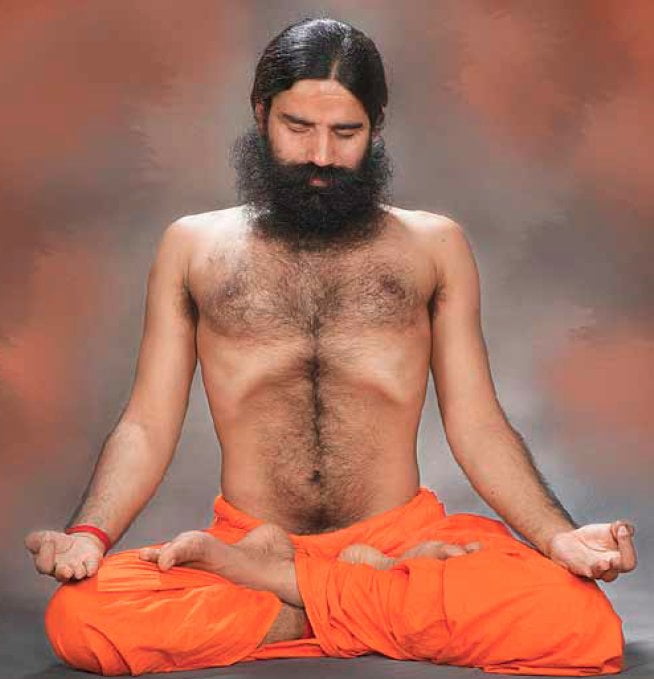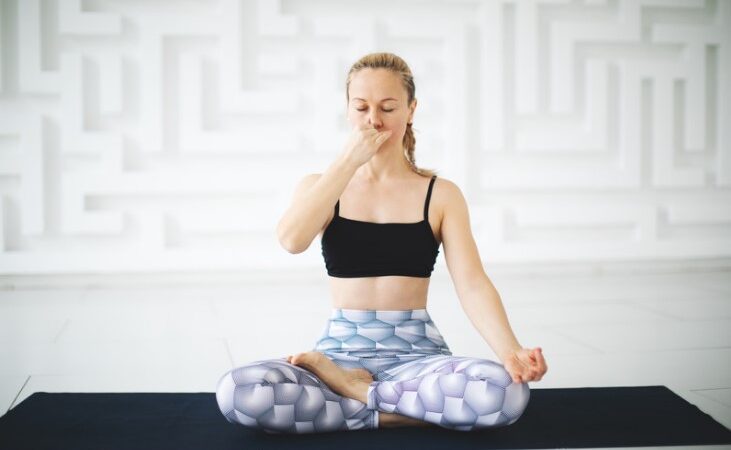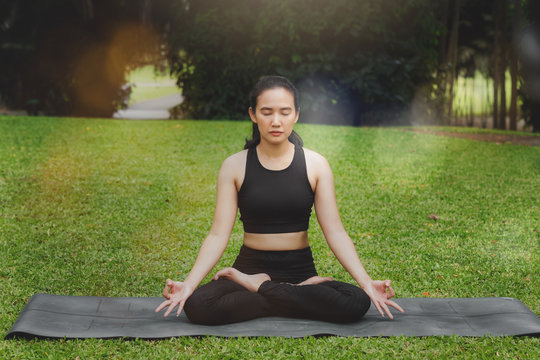

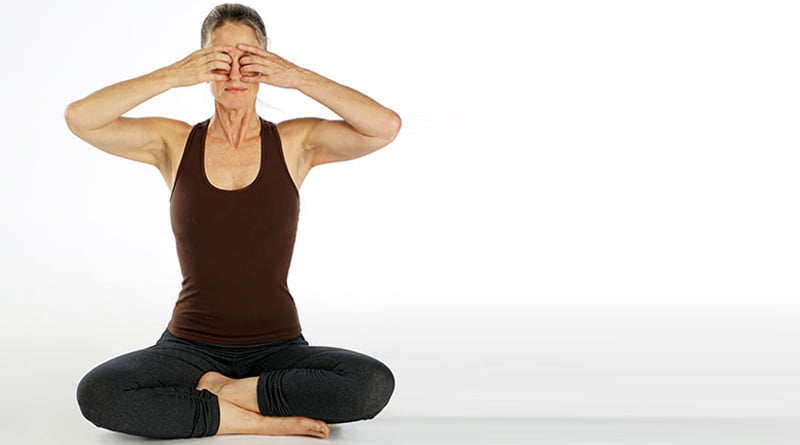
Bhramari Pranayama is the best pranayama to calm your mind and remove anger. This pranayama is very useful for removing the frustration and stress of the mind. This pranayama is quite simple, and it can be done anytime, anywhere during the day. Bhramari Pranayama is the perfect solution to many health issues. So, let’s see what the benefits of Bhramari Pranayama are.
Table of Contents
Key Takeaways:
- Bhramari Pranayama, or Bee-Breathing Technique, uses slow breathing and gentle humming to promote relaxation and mental calmness.
- It may help reduce stress, anger, anxiety, and mental tension when practiced regularly.
- The humming vibration may provide a feeling of nasal openness and relaxation.
- Practice Bhramari gently using Shanmukhi Mudra, keeping the fingers around the eyes light and comfortable.
- People with certain conditions, including ear problems, epilepsy, very low blood pressure, or recent ear/chest surgery, should seek professional advice before practicing.
- Bhramari should be considered a complementary wellness practice, not a replacement for appropriate medical treatment.
What Is Bhramari Pranayama?
Bhramari Pranayama is also known in English as the Bee-Breathing Technique. The word Bhramari Pranayama is derived from ‘Bhramar’, which means a buzzing black bee. While practicing this pranayama, the practitioner produces a humming sound from the nostrils, which is similar to the echo of the black bee; hence it is called Bhramari Pranayama.
Note:
When doing Bhramari Pranayama, think that you are connected to the positive forces of the entire universe. And the positivity is spread around you. Imagine yourself being a divine light between the two eyes. Feel that your whole body, soul, and mind are being published with that divine light. Feel the hidden happiness and true peace within yourself.
What Science Says About Bhramari Pranayama
Bhramari Pranayama, also known as Bee Breath, has attracted scientific interest because of its potential effects on stress, cardiovascular function, and emotional well-being.
A comprehensive review published in the Indian Journal of Physiology and Pharmacology in 2024 examined 46 experimental studies published between 2006 and 2023. These included 18 single-arm clinical trials, 22 clinically controlled trials, and six randomized controlled trials.
The review reported encouraging associations between Bhramari practice and:
- Blood pressure and heart rate: Studies reported reductions in blood pressure and heart rate, suggesting potential benefits for cardiovascular relaxation.
- Heart rate variability (HRV): Findings suggested improved parasympathetic activity, which is associated with the body’s capacity to recover from stress.
- Stress and anxiety: Several studies reported lower levels of perceived stress, anxiety, and depressive symptoms.
- Sleep quality: Some studies found improvements in reported sleep quality, although stronger research is needed to establish its effectiveness for insomnia.
- Tinnitus: Preliminary findings suggest that Bhramari may help reduce tinnitus-related distress and associated anxiety in some people.
What do these findings mean? Bhramari may be a useful complementary relaxation practice. However, the studies varied in design, duration, and quality, and only six were randomized controlled trials. The findings do not establish that Bhramari can cure hypertension, anxiety disorders, insomnia, or tinnitus. It should complement—not replace—appropriate medical care.
Research reference: Chetry D, Chhetri A, Rajak DK, Rathore V, Gupta A. “Exploring the health benefits of bhramari pranayama (humming bee breathing): A comprehensive literature review.” Indian Journal of Physiology and Pharmacology. 2024;68:71–85. DOI: 10.25259/IJPP3252023.
Steps To Do Bhramari Pranayama:
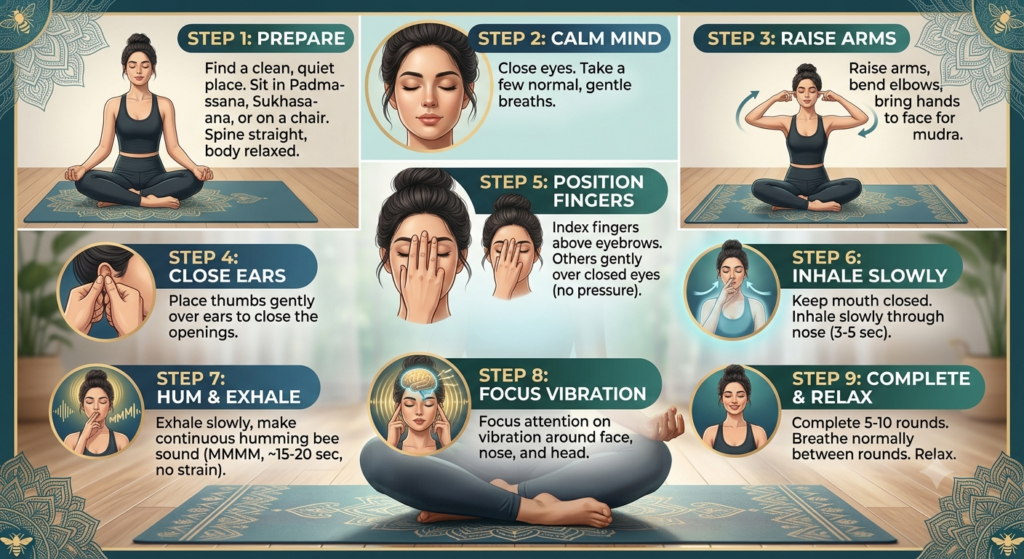
Choose a clean, quiet, and comfortable place and sit in Padmasana, Sukhasana, or comfortably on a chair. Keep your spine straight and relax your body.
Close your eyes and take a few normal, gentle breaths to calm your mind.
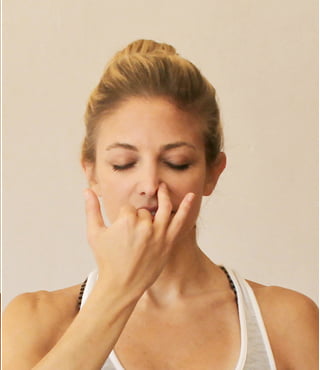
Raise both arms to shoulder level, bend your elbows, and bring your hands toward your face to prepare for Shanmukhi Mudra.
Place your thumbs gently over your ears to close the ear openings.
Place your index fingers lightly above your eyebrows.
Place your middle, ring, and little fingers gently over your closed eyes. Do not press the eyes. Keep your touch soft and comfortable.
Keep your mouth closed and inhale slowly through your nose for approximately 3–5 seconds.
Exhale slowly through your nose while making a smooth, continuous humming sound like a bee (“mmmm”). Ideally, the exhalation can last around 15–20 seconds, but never strain or hold your breath uncomfortably.
During the humming, keep your attention on the gentle vibration around your face, nose, and head, allowing your mind to remain calm and focused.
Complete 5-10 rounds, breathing normally between rounds if necessary. Practice gently and gradually increase the duration as you become comfortable.
Note:
You should keep the waist, neck, and head fixed and straight while doing Bhramari Pranayama.
Time Duration Of Bhramari Pranayama:
It takes around 15-20 seconds to complete a round of Bhramari Pranayama. A round of Bhramari Pranayama means one complete cycle of inhaling gently through the nose and exhaling with the humming sound.
Beginners can start with 3-5 rounds, focusing on comfortable, relaxed breathing without straining. Then they can extend to a session.
A session refers to the total time spent practicing, including the rounds and short periods of normal breathing or rest between them. As you become comfortable with the practice, a full Bhramari session can gradually be extended to approximately 5–10 minutes. Always practice at a comfortable pace and stop if you experience dizziness, pain, or breathing difficulty.
How Bhramari Pranayama Calms the Nervous System:
Bhramari combines slow, controlled breathing with gentle humming. Together, these actions may help the body move away from a heightened stress response and toward a calmer state.
1. Supporting parasympathetic activity
The autonomic nervous system helps regulate functions such as heart rate and breathing. Its parasympathetic branch supports rest and recovery. Slow, comfortable breathing can influence autonomic regulation, and research on Bhramari has reported changes consistent with increased parasympathetic activity.
2. The possible role of the vagus nerve
The vagus nerve is an important part of the parasympathetic nervous system and helps regulate heart and other organ functions. Slow breathing and relaxation may influence vagally mediated heart-rate patterns. However, it is more accurate to say that Bhramari may support relaxation and autonomic regulation than to claim that humming directly stimulates the vagus nerve in a proven, clinically significant way.
3. Humming and nitric oxide
Research has shown that humming increases the release of nitric oxide measured in the nose. Nitric oxide is a naturally occurring molecule involved in several physiological processes, including the regulation of blood vessels and local airway function. A small physiological study found that nasal nitric oxide increased substantially during humming compared with silent exhalation.
This finding provides a plausible explanation for one effect of humming, but it does not prove that Bhramari improves blood pressure, treats sinus disease, or produces other whole-body health benefits through nitric oxide.
4. Attention and sensory awareness
Listening to the sound and vibration of each exhalation gives the mind a simple point of focus. This can help interrupt repetitive thoughts and make it easier to settle into a period of relaxation.
The takeaway: Bhramari is best understood as a gentle breathing and relaxation technique with promising research behind it—not as a guaranteed nervous-system reset or a replacement for medical treatment.
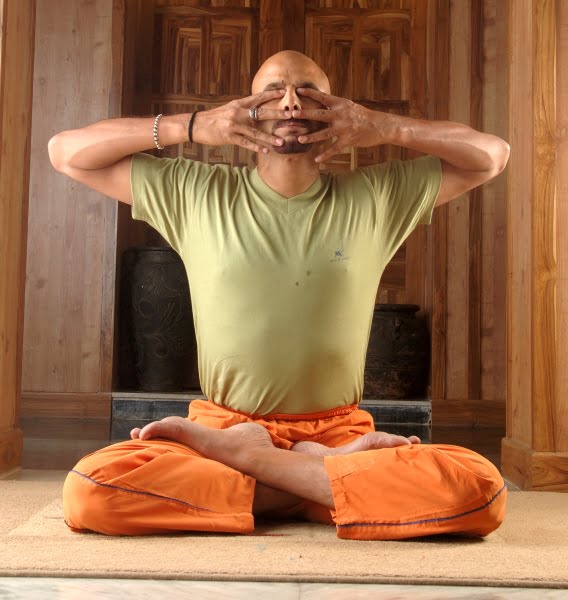
Shanmukhi Mudra: a hand variation for Bhramari
Shanmukhi Mudra is a traditional yogic hand gesture sometimes used during Bhramari to reduce external sensory distractions and encourage inward attention. The exact finger placement varies between yoga traditions.
To try a gentle version:
- Sit comfortably with your spine upright and shoulders relaxed.
- Close your eyes and take a few natural breaths.
- Bring your hands toward your face. Rest your thumbs lightly near the outer ear openings without pushing into the ears.
- Place your index fingers gently on the forehead above the eyebrows. Rest the remaining fingers lightly around the closed eyelids and sides of the nose, according to the variation you have learned.
- Keep the eyes completely free from pressure. Do not squeeze the nostrils shut or obstruct your breathing.
- Inhale comfortably through the nose. As you exhale, make a soft, steady humming sound with your lips closed.
- Release the hands, breathe normally, and notice how you feel.
Beginner-friendly alternative: You do not need to use Shanmukhi Mudra to benefit from Bhramari. Keep your hands on your knees, close your eyes if comfortable, and hum gently on each exhalation.
Avoid pressing on the eyeballs, forcing pressure into the ears, or using this variation if it causes ear pain, dizziness, or discomfort.
Common Mistakes to Avoid During Bhramari
Bhramari is simple, but beginners sometimes make the practice unnecessarily forceful.
- Humming too loudly: Use a soft, comfortable buzz. A louder sound is not necessarily more effective.
- Forcing a long exhalation: Let the humming last only as long as your comfortable breath allows. Never strain to reach a particular number of seconds.
- Holding the breath: Breathe naturally between rounds. Breath retention is not necessary for basic Bhramari.
- Tensing the face or shoulders: Keep the jaw, forehead, neck, and shoulders relaxed.
- Pressing the ears or eyes too firmly: Hand placement should be light and comfortable. Ear closure is optional.
- Breathing too deeply or too quickly: Avoid repeated oversized inhalations that make you feel light-headed.
- Expecting instant medical results: Relaxation may occur quickly, but improvements in sleep or stress vary between individuals.
- Practising through discomfort: Stop if you develop dizziness, breathlessness, ear pain, chest discomfort, or unusual symptoms.
A few comfortable rounds performed consistently are preferable to an intense session that leaves you feeling strained.
How Often and When to Practise Bhramari Pranayama
Beginners can start with 5 comfortable rounds once a day and gradually increase to 5–10 minutes if the practice feels easy and relaxing. There is no universally established ideal number of rounds; comfort and consistency matter more than duration.
Morning practice
- Practise after waking up, before breakfast if convenient.
- Sit in a quiet, well-ventilated space.
- Use a few rounds to settle your attention before meditation, yoga, or daily activities.
Evening and bedtime practice
- Practise 5–10 gentle rounds as part of a calming evening routine.
- Choose a quiet place with dim lighting and minimal distractions.
- Allow yourself a few minutes of normal breathing afterward.
You do not have to practise on an empty stomach at every session. However, avoid a session immediately after a heavy meal if it makes you uncomfortable.
Start with a manageable routine and adjust according to your response. If you have a medical condition, ask your healthcare professional whether this breathing practice is suitable for you.
Can Bhramari Help You Sleep Better?
Bhramari may help prepare the mind and body for sleep by providing a quiet, repetitive focus and encouraging relaxation. The gentle humming sound can make it easier to shift attention away from worries, mental chatter, and the day’s demands.
To use Bhramari in your bedtime routine:
- Finish your usual evening activities and settle into a comfortable seated position.
- Close your eyes if comfortable and allow your breathing to become natural.
- Inhale gently through your nose.
- Exhale with a soft, continuous humming sound.
- Repeat for 5–10 rounds without forcing the breath.
- Sit quietly for a minute or two before going to bed.
You can also practise while seated on the edge of your bed. If you feel sleepy, finish the practice rather than trying to maintain a rigid posture.
What does the research say? The 2024 review in the Indian Journal of Physiology and Pharmacology reported improvements in sleep quality across some included studies. However, evidence is not yet strong enough to conclude that Bhramari treats chronic insomnia.
If sleep problems persist, interfere with daily life, or occur alongside loud snoring or breathing difficulties during sleep, consult a healthcare professional.
Bhramari for Stress and Anxiety
Bhramari may be a helpful relaxation exercise when you feel worried, overwhelmed, or mentally restless. The combination of gentle exhalation, humming, and focused listening gives you a simple activity to return to when thoughts begin to race.
For a short calming session:
- Sit comfortably and relax your shoulders.
- Take three natural breaths without trying to change their depth.
- Complete five gentle rounds of Bhramari, allowing the humming to follow your natural exhalation.
- Pause and notice your breathing, muscle tension, and emotional state.
- Repeat a few more rounds only if they feel comfortable.
You can use this practice before a stressful task, after a busy day, or during a quiet break.
The 2024 literature review reported lower stress and anxiety levels in some studies of Bhramari. Nevertheless, individual results vary, and the evidence does not establish Bhramari as a standalone treatment for an anxiety disorder.
If anxiety is persistent, severe, or affecting your relationships, work, or sleep, consider professional support. Bhramari can be one part of a broader care plan that may include therapy and other recommended treatments.
Precautions Of Bhramari Pranayama:
- Avoid Bhramari Pranayama if you have an ear infection or ear pain, as the humming vibration may cause discomfort.
- People with epilepsy should practice only after consulting a qualified healthcare professional.
- If you have very low blood pressure (BP), seek professional advice before practicing.
- Avoid the practice during recovery from recent ear or chest surgery, unless your doctor has cleared it.
- During pregnancy, practice gently and preferably under the guidance of a qualified yoga instructor or healthcare professional.
- Do not press your eyes hard while performing Bhramari. Keep the pressure around the eyes very light and comfortable.
- Stop immediately if you experience dizziness, pain, breathing difficulty, or unusual discomfort.
Note:
With this pranayama, you can also get a melodious voice. By doing this pranayama, the diseases related to the throat are also removed.
Benefits of Bhramari Pranayama:
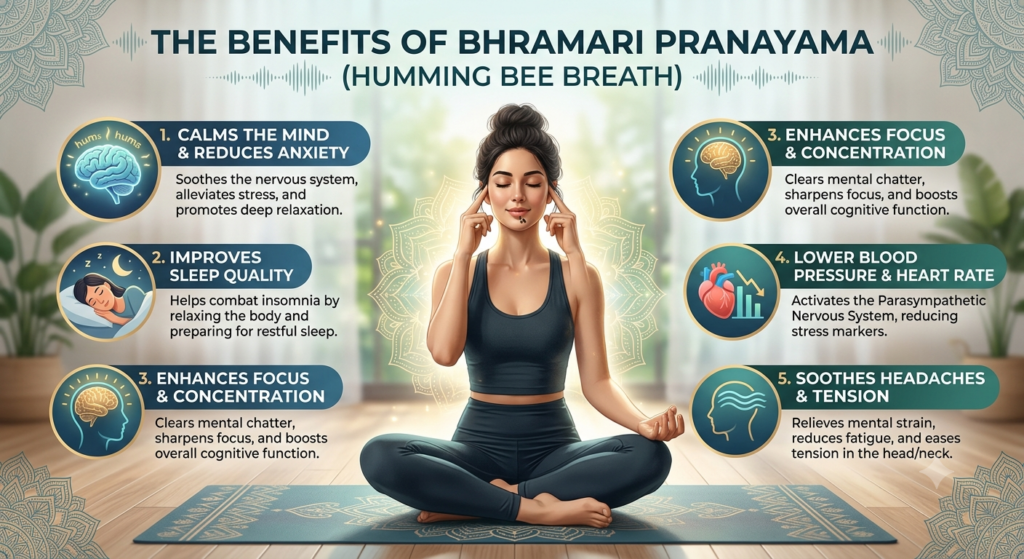
Bhramari Pranayama has many benefits to our health and mind. Regular practice of Bhramari Pranayama can cure many health issues. See below the Bhramari Pranayama benefits…
Treat Sinus:
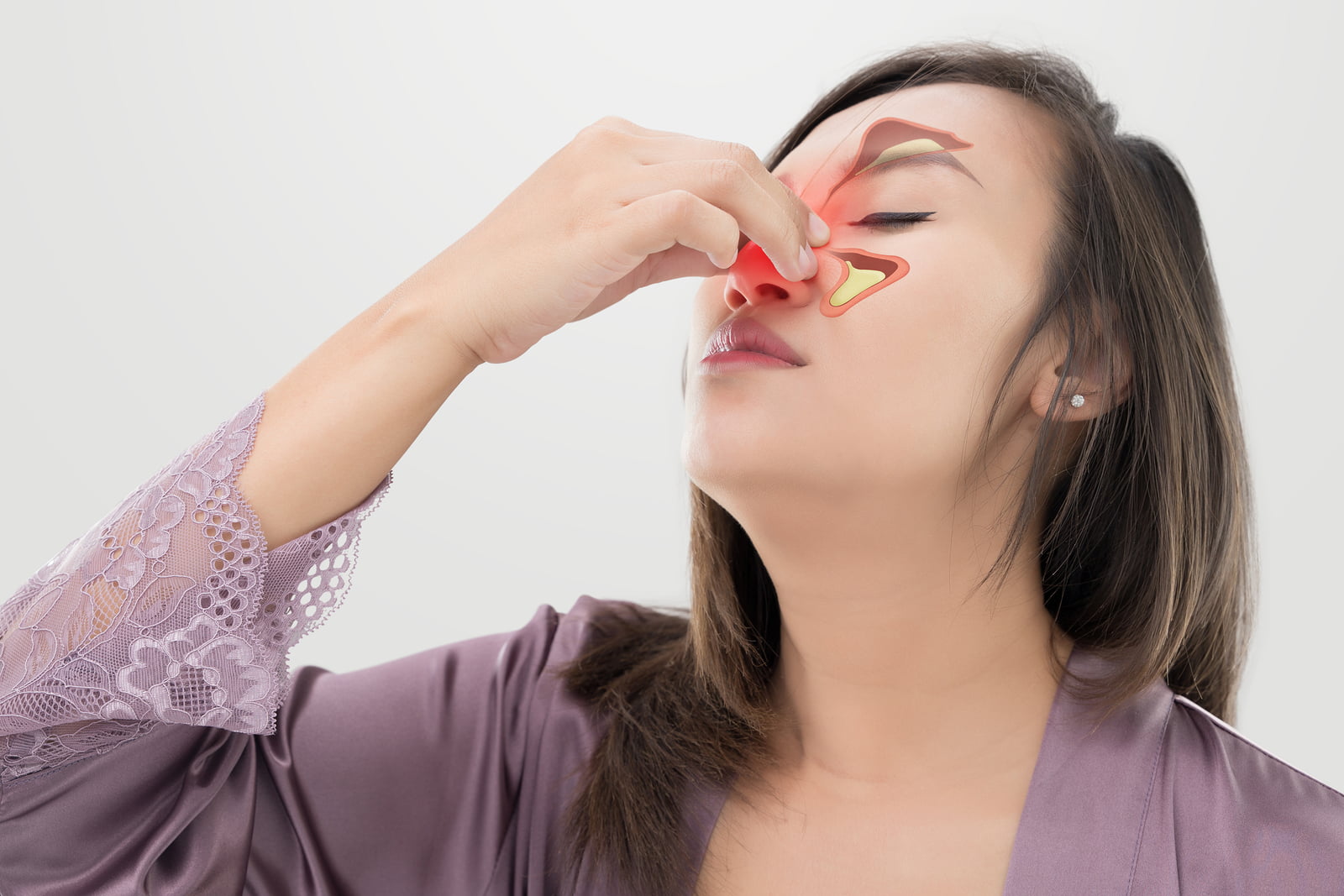
Bhramari Pranayama may help reduce sinus-related discomfort by combining slow nasal breathing with gentle humming vibrations. When you hum during exhalation, the vibration around the nose and facial area may increase airflow and promote a feeling of nasal openness. Slow, controlled breathing can also encourage relaxation and reduce stress, which may help people cope with congestion and facial pressure. Regular practice may support comfortable breathing and general nasal function.

Reduce Stress:
Mental stress arises from the thoughts of the mind. These are some thoughts that go on in your mind, and you can not negotiate with anyone. Some worries about the family, with money or physical problems which have become so bad for you that you have to get help from other people to get out of this. The practice of this pranayama reduces stress.
Helps To Control Blood Pressure:
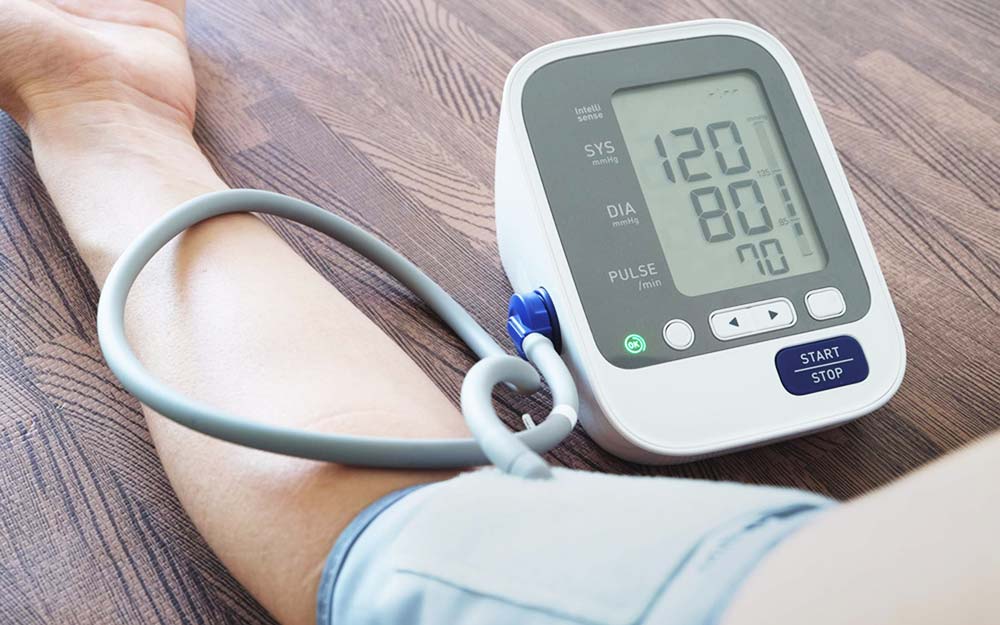
The pressure that comes in the tubes from the blood flowing in the body is called blood pressure. When blood flow is high, it is called high blood pressure or hypertension. When the blood flow is low, it is called low blood pressure. High blood pressure causes any kind of health issues. The Bhramari Pranayama is beneficial to a person suffering from high blood pressure. It helps to control blood pressure and helps to improve overall health.
Awaken Kundalini Power:
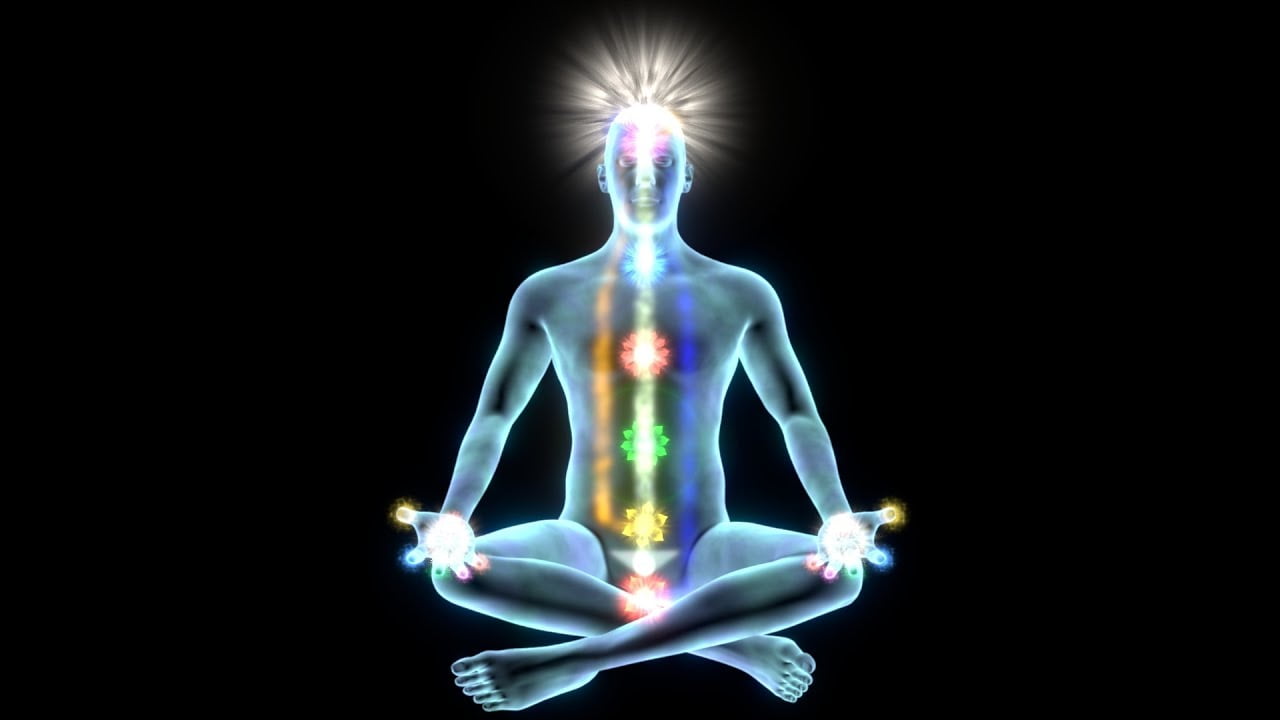
Kundalini Power is one of the greatest powers of our mind and body. Kundalini Power helps to improve life and health. With the help of Bhramari Pranayama, Kundalini Power can be awakened.
Bhramari Pranayama for Migraine:
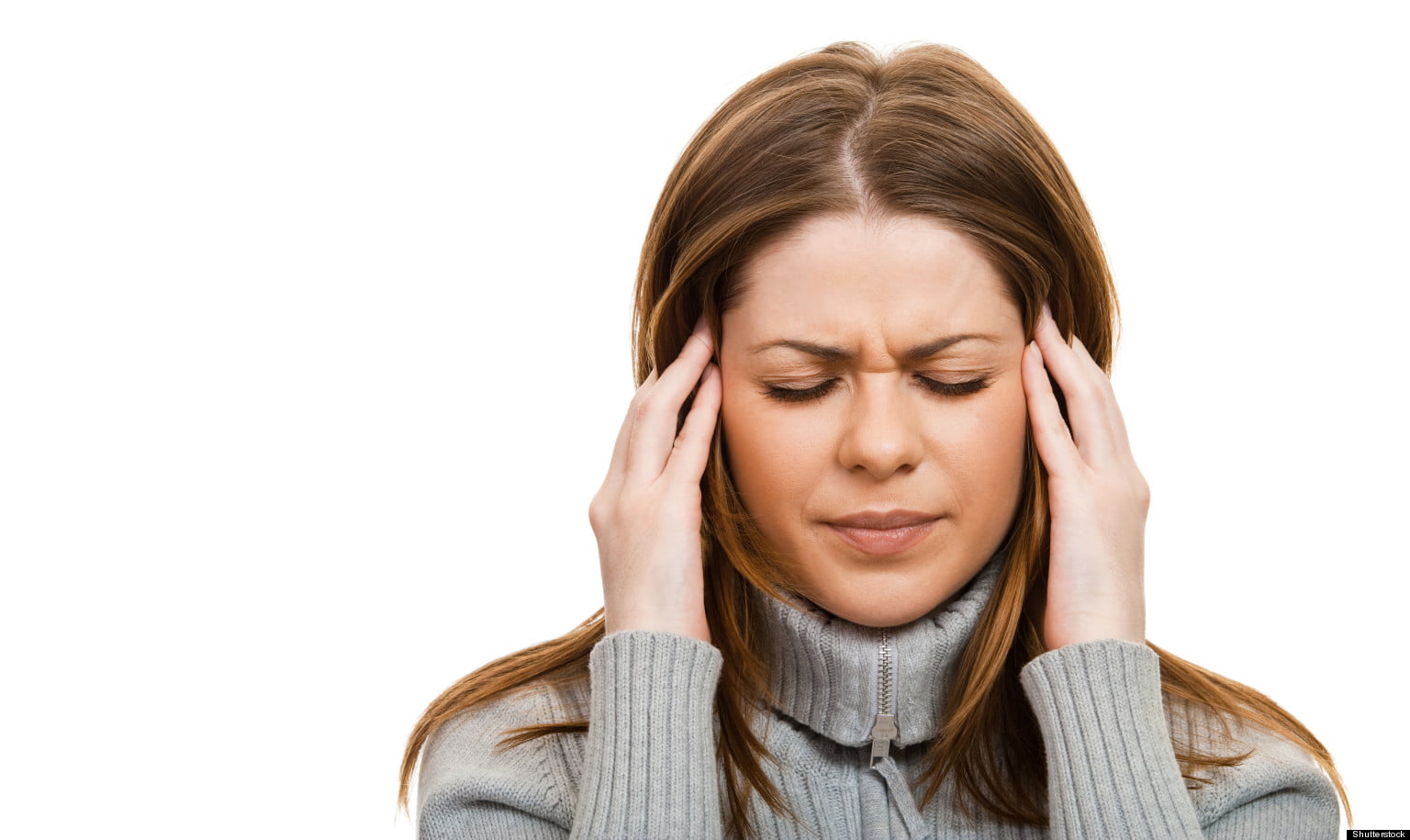
It is really difficult to tolerate migraine pain. Vomiting, dizziness, and tiredness are the main symptoms of migraine. The migraine pain occurs in one part of the head. Practicing Bhramari Pranayama regularly helps to treat migraine and reduce the pain of migraine.
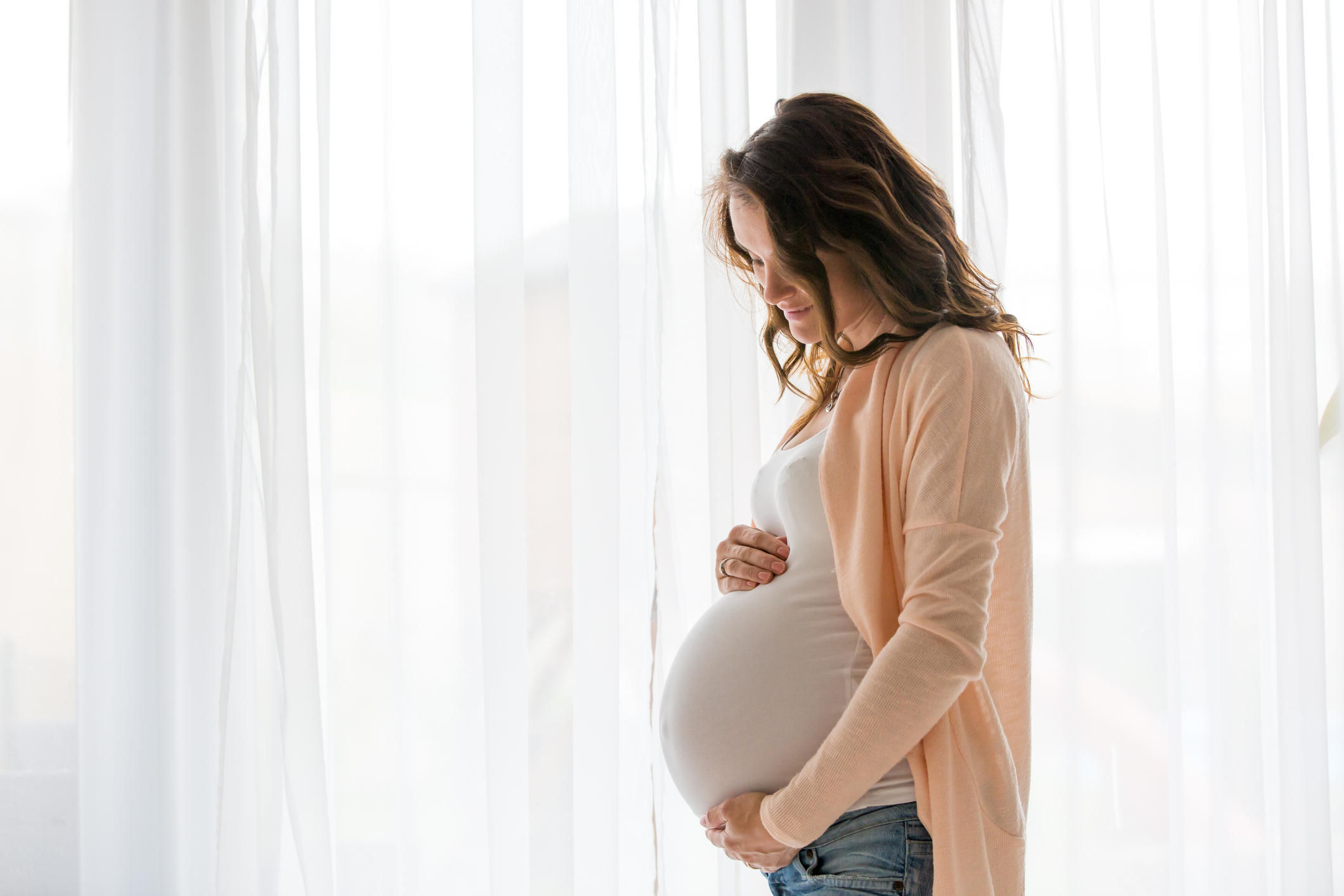
Beneficial For Pregnant Women:
When pregnant women do Bhramari pranayama, the baby is born smoothly at delivery time. And this pranayama helps in improving the endocrine system of pregnant women. This is one of the benefits of Bhramari pranayama. (Nevertheless, pregnant women do the same after the doctor’s recommendation.)
Brings Positivity:
Through the daily practice of Bhramari pranayama, the thinking becomes positive, and the memory of the person develops. And this pranayama also develops wisdom.

May Treat Mental Disorders:
Bhramari Pranayama proves highly advantageous in alleviating fear, insomnia, anxiety, anger, and various other mental disorders. Such positive outcomes are among the advantages offered by this pranayama technique.
Relaxes Mind:
Bhramari Pranayama relaxes the mind through slow, controlled breathing and gentle humming vibrations. The prolonged humming sound encourages focus, reduces mental distractions, and promotes a calm state. It may help lower feelings of stress and anxiety while creating a sense of inner peace. Regular practice can support emotional relaxation and mental clarity.
May Treat Thyroid Problem:
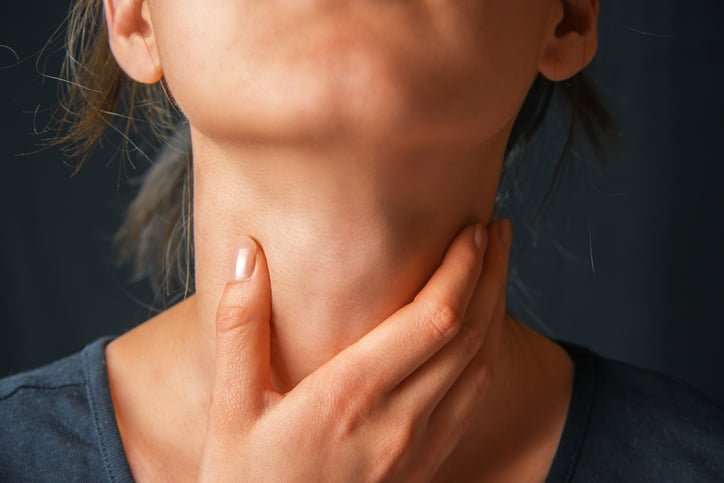
If a person is suffering from a thyroid problem, after having his chin tied to the neck, then he would benefit from the fasting and practice of Bhramari pranayama. The person suffering from a thyroid problem benefits. Hypothyroidism is a medical condition in which the thyroid gland starts forming thyroid hormones in small quantities; in such cases, this yoga is quite beneficial.
These are the Bhramari Pranayama benefits. So, practice this pranayama regularly to benefit from these ways.
FAQs:
Q. What is Bhramari Pranayama?
A. Bhramari Pranayama, also known as Bee Breath, is a yogic breathing technique where a gentle humming sound is produced during exhalation, resembling the sound of a bee. It soothes the nervous system and is especially effective for relieving stress, anxiety, and mental tension.
Q. How does Bhramari Pranayama affect the brain and mental health?
A. The humming vibration stimulates the vagus nerve, promoting relaxation and emotional balance. It reduces cortisol levels (stress hormone) and activates the parasympathetic nervous system, leading to mental clarity and calm.
Q. Can Bhramari Pranayama help with heart health?
A. Yes. Bhramari Pranayama helps lower blood pressure, reduces heart rate, and relaxes the cardiovascular system by calming the mind and improving oxygen flow, all of which benefit heart health.
Q. Is Bhramari Pranayama good for sleep issues?
A. Absolutely. Practicing it helps quiet the mind, reduces insomnia, and promotes deep, restful sleep by easing nervous tension and anxiety.
Q. Can it help relieve headaches or migraines?
A. Yes. The gentle humming vibration relaxes the facial muscles, reduces tension, and increases oxygen supply to the brain, which can help ease headaches and migraines.
Q. Is Bhramari Pranayama useful for students and professionals?
A. Definitely. It enhances focus, memory, and mental clarity, making it excellent for students and those with mentally demanding jobs. A few minutes daily can improve productivity and emotional resilience.
Q. How often should I practice Bhramari Pranayama?
A. You can practice it once or twice daily for 5–10 minutes. For best results, practice on an empty stomach in a quiet environment.
Q. Can Bhramari Pranayama help with sleep?
A. Yes, it may help you relax before bedtime and may support better perceived sleep quality. Research is promising, but Bhramari has not been established as a cure for insomnia. Try 5-10 gentle rounds as part of a regular bedtime routine.
Q. Can I do Bhramari if I have high blood pressure?
A. Many people with high blood pressure may be able to practise gentle Bhramari, but individual advice matters. Avoid breath-holding, straining, and forceful breathing. Continue your prescribed treatment and ask your healthcare professional whether it is appropriate for you.
Q. Is Bhramari safe during pregnancy?
A. Gentle Bhramari may be suitable for many pregnant people, but safety depends on individual circumstances. Ask your maternity care professional before beginning, particularly if you have a high-risk pregnancy or pregnancy-related complications. Avoid breath retention and straining.
Q. What is the best time to practise Bhramari Pranayama?
A. Morning is a good option for beginning the day calmly, while evening or bedtime practice may help you unwind. The best time is one that fits your routine and allows you to practise comfortably and consistently.
Q. Can Bhramari help with anxiety?
A. It may help some people feel calmer and manage everyday stress. Research has reported reductions in anxiety, but Bhramari should not replace professional treatment when an anxiety disorder is present.