
Yoga has been an integral part of Indian culture since ancient times, as described in the Vedas and classical yogic literature. Regular yoga practice not only helps prevent major diseases but also promotes mental peace, emotional balance, and overall well-being. Among the many effective yoga asanas, Kati Chakrasana stands out for improving spinal flexibility, reducing back pain, and supporting weight management.
One of the most important yet often overlooked aspects of this posture is breathing in Kati Chakrasana. Correct breathing enhances the benefits of the asana and ensures safe and effective practice. In this article, we will explore the meaning, correct breathing technique, steps, benefits, precautions, and FAQs related to breathing in Kati Chakrasana.
Table of Contents
What Is Kati Chakrasana?
The term Kati Chakrasana is derived from two Sanskrit words:
Kati – Waist
Chakra – Wheel or rotation
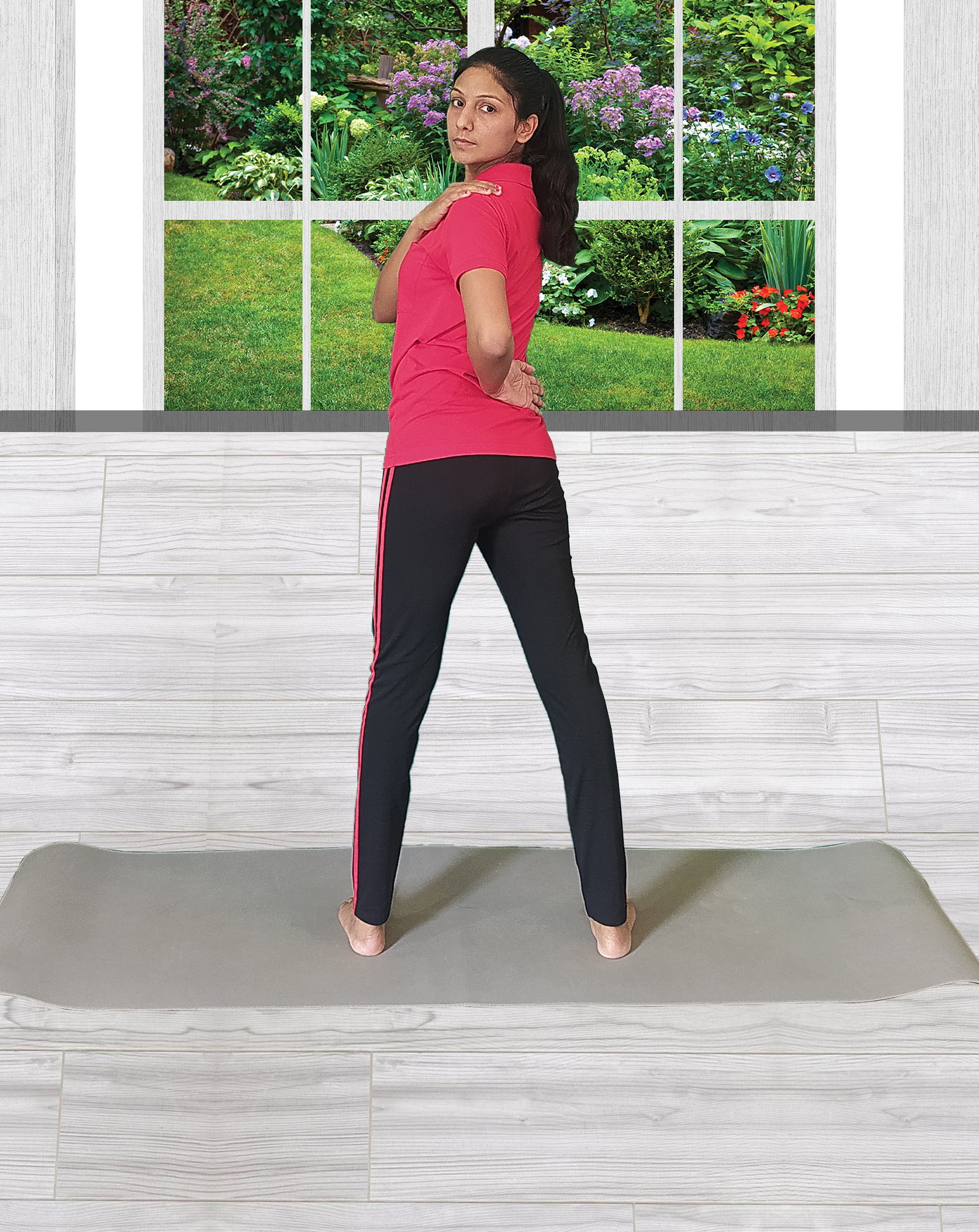
Kati Chakrasana is a standing spinal twist posture in which the waist rotates alternately to the right and left. The twisting motion resembles the rotation of a wheel, which is why it is called Kati Chakrasana.
This asana gently stretches the spine, waist, hips, and abdominal muscles while stimulating the digestive and respiratory systems.
Importance of Breathing in Kati Chakrasana
Proper breathing in Kati Chakrasana plays a crucial role in maximizing the effectiveness of the posture. Coordinating breath with movement helps:
Improve oxygen flow in the body
Enhance spinal mobility
Reduce muscle stiffness
Calm the nervous system
Increase focus and mind-body awareness
Incorrect breathing may reduce benefits or cause discomfort, especially in the lower back or waist area.
Correct Breathing Technique in Kati Chakrasana
Understanding how to breathe in Kati Chakrasana is essential for beginners and advanced practitioners alike.
Breathing Pattern
Inhale deeply while standing in the center position
Exhale slowly as you twist the waist to one side
Hold the position briefly with normal breathing
Inhale while returning to the center
Exhale again while twisting to the opposite side
This rhythmic breathing pattern helps deepen the twist without strain.

Step-by-Step Practice of Kati Chakrasana with Breathing
Follow these steps carefully to practice breathing in Kati Chakrasana correctly:
Stand upright with your feet 1.5 to 2 feet apart.
Keep your spine straight and shoulders relaxed.
Stretch both arms sideways at shoulder level.
Inhale deeply in the starting position.
While exhaling, twist your waist to the left.
Place your left hand on the right shoulder and bring your right hand behind your back.
Turn your head and gaze over your left shoulder.
Maintain the posture for a few seconds with relaxed breathing.
Inhale and slowly return to the center.
Repeat the same steps on the right side while exhaling during the twist.
This completes one full round of Kati Chakrasana.
Key Points to Remember While Breathing in Kati Chakrasana
Keep breathing slowly, deeply, and controlled
Do not hold your breath forcefully
Knees should remain straight but not locked
Feet should stay firmly grounded
Movement should be smooth and pain-free
Benefits of Breathing in Kati Chakrasana
Practicing breathing in Kati Chakrasana regularly and correctly offers multiple physical and mental benefits.
1. Helps Reduce Excess Weight
The twisting motion, combined with controlled breathing, stimulates metabolism and helps burn abdominal fat.
2. Improves Digestive Health
Kati Chakrasana activates abdominal organs, relieving constipation, gas, and indigestion.
3. Supports Diabetes Management
Regular practice may help improve insulin sensitivity and pancreatic function.
4. Strengthens Spine and Muscles
This asana strengthens the waist, back, shoulders, neck, arms, and thighs.
5. Improves Respiratory Function
Deep breathing in Kati Chakrasana enhances lung capacity and supports respiratory health.
6. Shapes and Tones the Waist
Women and men aiming to slim their waistlines can benefit from daily practice.
7. Reduces Back Pain and Stiffness
Gentle spinal twists release tension and improve flexibility in the lower back.
Precautions and Contraindications
Although breathing in Kati Chakrasana is safe for most people, avoid or modify the practice if you have:
- Severe lower back pain
- Slipped disc or spinal injury
- Recent abdominal surgery
- Pregnancy (practice only under expert guidance)
If pain occurs while twisting, stop immediately and consult a yoga expert.
Best Time to Practice Kati Chakrasana
Early morning on an empty stomach is ideal
Alternatively, practice 4–5 hours after meals
Perform 5–10 rounds depending on comfort and experience
Conclusion
Breathing in Kati Chakrasana is as important as the posture itself. When performed with correct breathing techniques, this simple standing twist becomes a powerful yoga asana for spinal health, digestion, weight management, and overall well-being. Incorporate mindful breathing into your daily yoga routine to fully experience the physical and mental benefits of Kati Chakrasana.
FAQs
Q. What is the correct breathing in Kati Chakrasana?
A. Inhale while standing straight and returning to the center, and exhale while twisting the waist to either side.
Q. Can beginners practice breathing in Kati Chakrasana?
A. Yes, beginners can safely practice Kati Chakrasana with slow movements and controlled breathing.
Q. How many times should Kati Chakrasana be practiced daily?
A. Practicing 5 to 10 rounds daily is sufficient for noticeable benefits.
Q. Does breathing in Kati Chakrasana help with back pain?
A. Yes, proper breathing combined with gentle twisting helps relieve stiffness and mild back pain.
Q. Is Kati Chakrasana good for digestion?
A. Yes, it stimulates digestive organs and helps relieve constipation and gas.
Q. Can Kati Chakrasana help in weight loss?
A. When practiced regularly with correct breathing, it supports weight loss by activating core muscles and metabolism.