
Pose information | Details |
|---|---|
Sanskrit name | Ardha Mandalasana |
English name | Half Circle Pose |
Type | Kneeling side bend and lateral stretch |
Level | Beginner to intermediate |
Stretches | Obliques, intercostal muscles, lats, shoulders, chest, hips and inner thighs |
Strengthens | Core, shoulders, upper back and supporting muscles of the trunk |
Suggested duration | 15–30 seconds per side initially; progress toward 30–60 seconds |
Main focus | Side-body flexibility, chest opening and spinal mobility |
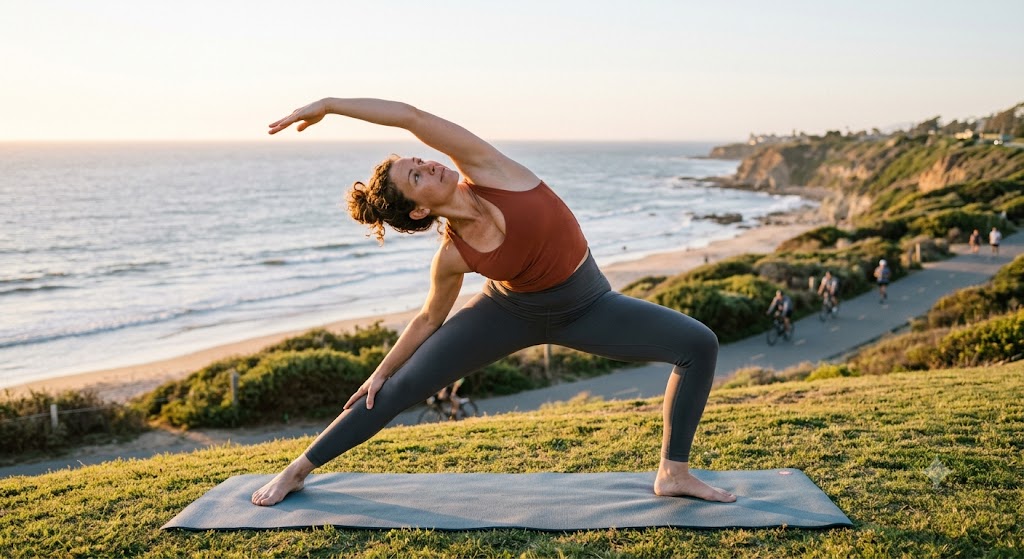
Ardha Mandalasana is also known as Half Circle Pose in English. This circle symbolizes the Cosmos symbolically and metaphysically. The circle is the focal point of our consciousness or psyche. This yoga helps to open your lower ribs and also facilitates your deep breath. This asana also stimulates your immune system and activates your thymus gland.
Table of Contents
What Does Ardha Mandalasana Mean (Half Circle Pose)?
The word Ardha Mandalasana is a Sanskrit Language word, which is composed of three Sanskrit words.
The first word is “Ardha (अर्धा)”, which means “Half”
The second word is “Mandala (मंडल)”, which means “Circle or Ring”
The third word is “Asana (आसन)”, which means “Yoga Pose”.
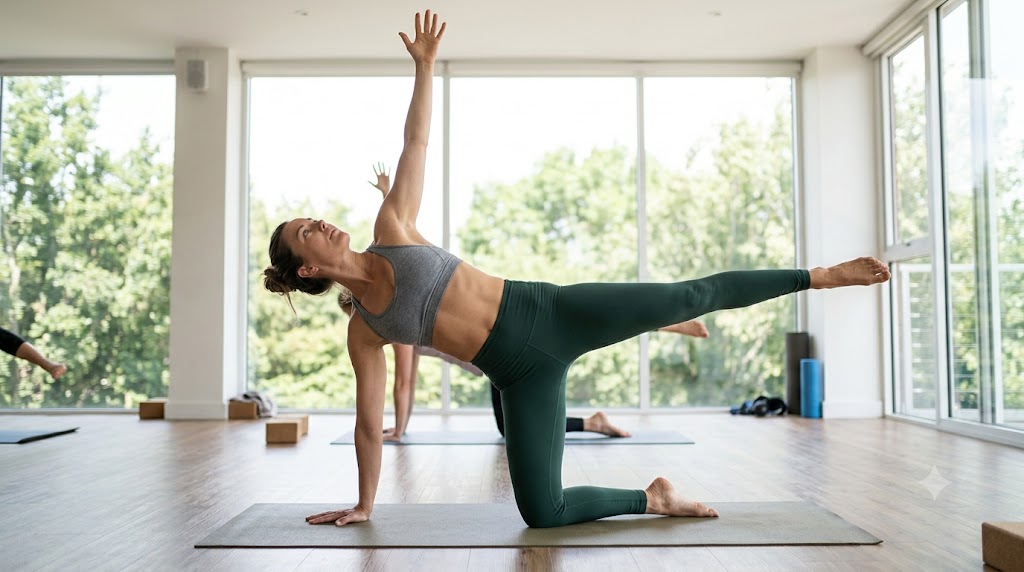
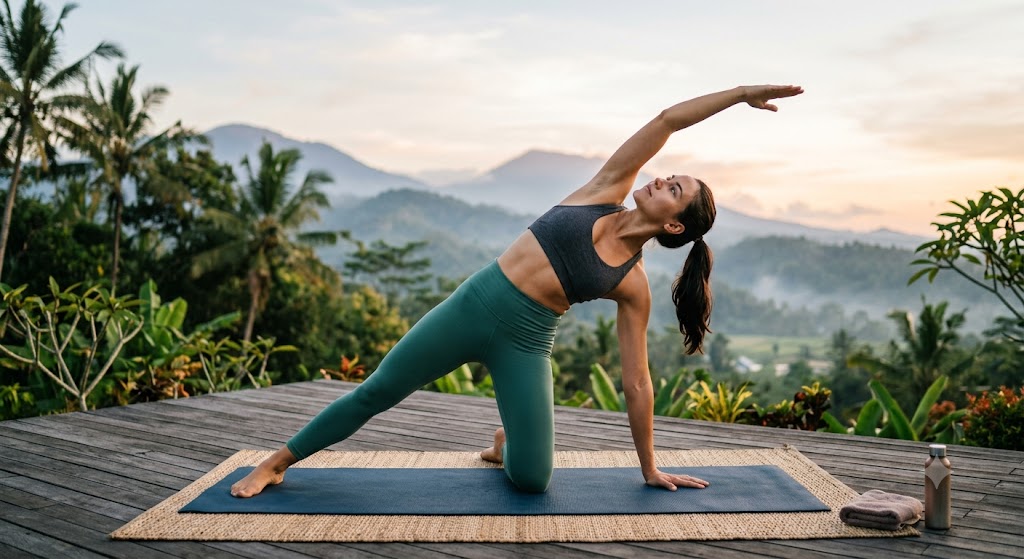
Ardha Mandalasana is basically a side stretching yoga pose. In the practice of half circle pose, your arm, leg, and torso form a semi-circle, and that is why this asana is named after a half circle.
This asana is also associated with the concept of mandalas that are in circular designs and appear as a microcosm of our universe, with cosmic power at the center. Today, in this article below, I am going to provide you with the method, benefits, precautions, preparatory poses, and follow-up poses of Ardha Mandalasana (Half Circle Pose).
Preparatory Poses of Ardha Mandalasana (Half Circle Pose):
- Virasana (वीरासन) or Hero Pose
- Balasana (बालासन) or Child’s Pose
- Bharmanasana (भरमानसाना) or Table Top Pose
- Ustrasana (उष्ट्रासन) or Camel Pose
Method of Doing Ardha Mandalasana (Half Circle Pose):
- At first, sit on a yoga mat on the floor in a kneeling position
- Now stand on your knees and then stretch your left leg out to your side and place the sole flat on the floor
- Place the right hand on the floor in the same line as your right knee is
- Create a stable seat and make yourself comfortable
- Now, with the support of your hand, bend your upper body to your right side
- Lift the left hand overhead, taking it at an equal angle as your extended leg and torso (Make sure your palm is facing forward)
- At this point, keep the pelvis neutral and stable
- Make a half circle with the lifted hand
- Look straight at your left palm and hold on to this posture for 30 to 60 minutes.
- To release from this posture, slowly bring your left hand down and then remove your right hand from the floor; sit in the kneeling position again
- Repeat this asana on your other side
- Do this at least 10-12 sets of this asana
Beginner’s Tips:
Being in the kneeling position, place a pillow or folded blanket at your side if you can’t reach the floor
You can also place a pillow or folded blanket under your leg if you feel a severe stretch in your leg
Do not force your body to perform this asana
Take a yoga teacher’s help to perform this asana if you are completely a beginner to any kind of yoga Asanas.
Follow-up Poses of Ardha Mandalasana (Half Circle Pose):
- Shashankasana (शशांकासन) or Rabbit Pose or Hare Pose
- Virasana (वीरासन) or Hero Pose
Variations of Ardha Mandalasana
Add the following section after the existing beginner’s tips.
Half Circle Pose on a Chair
The chair variation is a useful alternative for people who find kneeling uncomfortable or have difficulty getting down to the floor.
How to practise:
Sit upright on a sturdy chair with both feet flat on the floor.
Place one hand on the chair seat for support.
Inhale and raise the opposite arm overhead.
Exhale and gently bend sideways without twisting or leaning forward.
Keep both sitting bones grounded and breathe naturally.
Hold for 15–30 seconds, return to the centre and repeat on the other side.
Benefits: This variation gently stretches the sides of the torso and shoulders while reducing pressure on the knees.
Kneeling Side Bend
This is a modified version of the traditional Half Circle Pose that allows you to control the depth of the stretch.
How to practise:
Begin kneeling on a yoga mat.
Extend your right leg sideways, keeping the foot grounded and the knee comfortable.
Place your left hand on your hip or a yoga block beside you.
Raise your right arm overhead and gently lean to the left.
Keep your hips steady and avoid collapsing into the supporting shoulder.
Hold for a few comfortable breaths and switch sides.
Modification: Keep the raised hand on your hip if reaching overhead causes shoulder discomfort.
Props for Half Circle Pose:
Blanket under the knee
Place a folded yoga blanket beneath the kneeling knee to cushion pressure against the floor. Adjust its thickness until the position feels comfortable. Stop if kneeling causes pain rather than simply pressure.
Block under the hand
Position a yoga block beside the supporting knee and rest your hand on it. Choose the block height that allows you to maintain a long spine and relaxed shoulders without forcing yourself toward the floor.
Other useful supports include a wall for balance and a sturdy chair for a seated variation.
Ardha Mandalasana and the Root Chakra
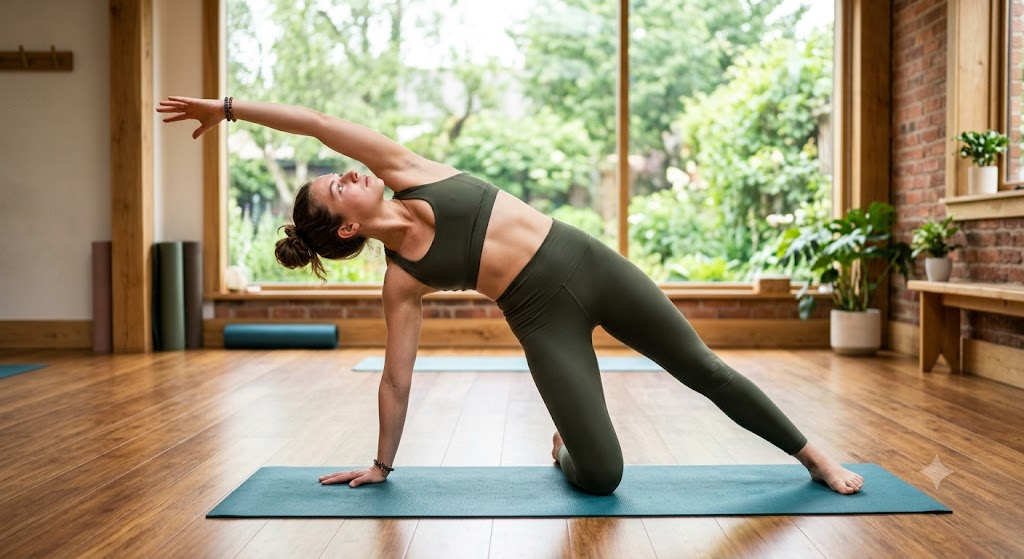
The Sanskrit name half circle pose combines three words: ardha, meaning “half”; mandala, meaning “circle”; and asana, meaning “pose.” The name reflects the semicircular shape created by the extended leg, torso, and raised arm.
Connection with Muladhara, the root chakra
The pose is traditionally associated with the Muladhara Chakra, or root chakra, in some yoga interpretations. Located symbolically at the base of the spine, this chakra is associated with stability, security, grounding and connection to the earth.
The grounded knee, stable foot and controlled breathing can make Half Circle Pose a useful opportunity to reflect on these qualities.
During the pose, try this simple mindfulness practice:
- Feel the contact of your foot and supporting knee with the ground.
- Breathe slowly without forcing the stretch.
- Imagine creating length through the spine while maintaining a stable base.
- Focus on steadiness, balance and calm.
The chakra connection is a traditional spiritual interpretation, not a scientifically established medical effect. The physical benefits of the pose are primarily related to stretching, mobility and muscular engagement.
Important: Stop immediately if you experience sharp pain, numbness, dizziness, or unusual discomfort. If a medical condition affects your ability to exercise, seek individualised professional guidance before practising.
Precautions for Ardha Mandalasana (Half Circle Pose):
Although Ardha Mandalasana can be adapted for many practitioners, some conditions require extra care or an alternative posture.
- Knee injury or knee pain: Avoid kneeling if it causes pain, swelling, or pressure on an injured joint. Try a chair-supported side bend instead, provided that movement is comfortable.
- Foot or ankle injury: The extended leg and grounded foot should remain comfortable. Avoid the pose if it aggravates an injury or requires painful pressure through the foot.
- Pregnancy: Avoid assuming the full pose is suitable throughout pregnancy. Changes in balance, joint mobility, and abdominal comfort may require modifications. Consult a qualified prenatal yoga instructor and your maternity care professional, particularly during a high-risk pregnancy.
- Hernia: Because abdominal pressure and body positioning may aggravate some hernias, seek medical guidance before practising. Avoid the pose if it causes pain, pressure, or bulging.
- Migraine: If bending or changing head position worsens your migraine symptoms, skip the pose during an attack. Practise only when comfortable and follow your healthcare professional’s advice.
- Shoulder, wrist, or back problems: The supporting arm and lateral bend may aggravate existing injuries. Use a suitable modification or seek guidance from a qualified yoga professional.
- Dizziness or balance difficulties: Move slowly and use a stable support. Stop if you feel dizzy or unsteady.
Benefits of Ardha Mandalasana (Half Circle Pose):
- There are some of the highest benefits of Ardha Mandalasana (Half Circle Pose) are given below. Check out the benefits here…
- The practice of Half Circle Pose engages our core muscles efficiently, devoid of overstretching
- As the yoga pose gesture, our Universe in the form of Half Circle, a profound sense of association of our body and mind is resultant
- The body and mind are thus achieving a good balance
- Encourages the initiation of the “Muladhara Chakra,” i.e., Root Chakra, and the “Vishuddha Chakra,” i.e., Throat Chakra (Yoga Sequence for the Root Chakra)
- It helps with meditation in a spiritual way
- Opens the pelvic area and hips, with the broadening of our thighs during Ardha Mandalasana practice
- Regular practice of half circle pose strengthens our diaphragm muscles
- Ardha Mandalasana stretches the spine, thus improving flexibility.
Conclusion:
Ardha Mandalasana, or Half Circle Pose, is a gentle yoga posture that can help improve side-body flexibility, spinal mobility, chest opening, and body awareness. With proper alignment, mindful breathing and the support of props such as a yoga block or folded blanket, practitioners can adapt the pose to suit their individual needs and experience levels. Beginners can also explore accessible alternatives, such as the seated chair variation, to practise more comfortably.
Incorporating Half Circle Pose into your regular yoga routine, along with suitable preparatory and follow-up poses, can help create a balanced practice. Remember to move slowly, avoid forcing the stretch, and respect your body’s limits. If you are pregnant or have a hernia, migraine symptoms, or a knee or foot injury, seek appropriate professional guidance before practising. With consistency and mindful awareness, Ardha Mandalasana can become a valuable part of a safe and balanced yoga practice.
FAQs:
Q. Is Half Circle Pose good for beginners?
A. Yes. Ardha Mandalasana can be suitable for beginners when practised gently with appropriate modifications. Use a folded blanket under the knee and a yoga block under the supporting hand if needed. A chair-supported side bend is an alternative if kneeling is uncomfortable.
Q. How long should I hold Half Circle Pose?
A. Start with 3-5 comfortable breaths on each side, usually around 10-20 seconds depending on your breathing. You can gradually increase the duration if the pose remains comfortable. There is no need to hold it for several minutes or force a deeper stretch.
Q. What muscles does Half Circle Pose stretch?
A. Ardha Mandalasana primarily stretches the muscles along the side of the torso, including the obliques and intercostal muscles, as well as parts of the shoulders, chest, hips, and inner thighs. The core and shoulder stabilisers also help support the posture.
Q. Can I practise Half Circle Pose with knee pain?
A. It depends on the cause and severity of your knee pain. Do not kneel through pain or place pressure on an injured knee. A chair-supported side bend may be more comfortable, but persistent pain, swelling, or an acute injury should be assessed by a healthcare professional before you resume practice.
Q. What is the difference between Half Circle Pose and Gate Pose?
A. Both poses involve a kneeling position with one leg extended sideways and a lateral stretch. In the commonly taught Half Circle Pose variation, the torso bends toward the kneeling side while the opposite arm reaches overhead, creating a semicircular shape. Gate Pose generally bends the torso toward the extended leg. Names and exact alignment may vary between yoga traditions and teaching styles.